Bobservation No. 2

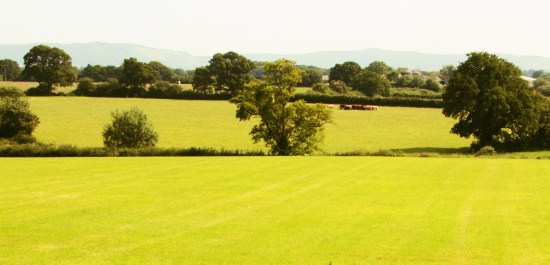
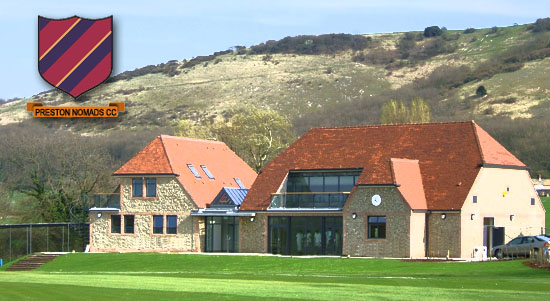
Preston Nomads Clubhouse - Downs in background

In praise of Preston Nomads Cricket Club…

The recent mini-furore over the licence application by Preston Nomads which, as I understand it, is to regularise their existing position, made me realise just how lucky we are in Fulking to have a cricket club of such note within the parish.

Other than the manic way in which some of the members can drive their cars from time to time, I do not recall any nuisance being caused by the club since the new pavilion was built and indeed before that.

In retrospect it was probably a pity that the principal access to the club was not arranged from the Poynings Road instead of Clappers Lane, but that is how it is and we all have to make the best of it.

I doubt there is, architecturally, a more attractive cricket club building in the South of England and the setting on a summer’s day is just magic viewed against the Downland backcloth.

Paul Hird, the Chairman of the club, has always gone out of his way to be welcoming to villagers and in particular St Andrew’s church has found the availability of the clubhouse for events a great blessing. The club have, over the years, been very generous in donating very attractive hampers for village events and making the clubhouse available to the village.

Let us count our blessings and see if we cannot appreciate the club more.

Bob Rowland

Arundel by-pass approved

The pink/blue route for the Arundel by-pass
The West Sussex Gazette reports:

The Transport Secretary has today (Monday 1 December) announced up to £250 million of funding for a new dual carriageway bypass of Arundel, linking together the two existing dual carriageway sections of the road. Previous plans for an Arundel bypass were cancelled in 2003.

The new bypass will complete the “missing link” between the two existing dual-carriageway sections, running on the previous preferred ‘pink-blue’ route, subject to consultation with the South Downs National Park Authority, local authorities and the publication of this and alternative options.

Nick Herbert MP said:

Along with all of Arundel’s elected representatives at the town, district and county council level, I continue to believe that the bypass is needed, and that an offline bypass on the previously agreed ‘pink-blue’ route is by far the best option. I am glad that this is the starting point for the consultation, and I do not support other proposed routes.

According to the Department of Transport’s Feasibility Study there are around 25,000 traffic movements through Arundel on the A27 every day, nearly 80 per cent of which is through traffic and not local. Sussex Enterprise have calculated that poor transport links in the county are costing £2 billion a year.

St. Botolph’s reopens

St._Botolph's
A special re-opening event is to be held at St Botolph’s Church, in Annington Road, Botolphs, on Saturday 6th December 6, at 2:00pm (followed by a carol service at 3:00pm), to allow people to see the results of the year-long first phase of the £380,000 restoration project. Mulled wine and mince pies will be served. The charge is £3 per head, children under 16 free with an adult. More here.

Our earlier posts on this project were Churches Conservation Trust takes over St. Botolph’s (April 2013) and The restoration of St. Botolph’s (April 2014).

3Bs in WWI (reprise)

Upper Beeding Boy Scouts 1916
Beeding and Bramber Local History Society have curated a display about life in Beeding, Bramber, Botolphs and Small Dole during the First World War. It includes medals, photographs, letters and postcards from the front, the story of the men who died and those who survived. The display ran for three days in early November at the Gladys Bevan Hall in Upper Beeding. You now have one final chance to see it, on Saturday 6th December from 12:00–3:00pm in the small back room of Upper Beeding Village Hall (opposite the car park).

Mud on the Downs

Mud on the Downs
Charlie Cain, the National Trust’s Head Warden for the South Downs, writes:

The situation is not ideal and it is our intention to remove the cattle as soon as we can. The grass growth this year has been exceptional due to the long summer and we need to keep it under control. The grazing of cattle is the most effective natural way of doing this. The excessive rainfall this autumn has made the situation worse. The grass is still growing and the cattle are causing more damage because the ground is so soft.

I am regularly monitoring the condition of the paths. We intend to replace the cattle with sheep for the winter but at the moment sheep would not consume enough grass. I am unable to predict exactly when this will happen. It will depend on how much the grass continues to grow.

As regards fencing, we have let some of the fences fall into disrepair lately. This is because a larger area is more-efficiently grazed by cattle. When a fence is situated up and down the hill you tend to get more ungrazed areas because you change the grazing pattern of the animals. Our plans for next year however include splitting the Fulking hillside into three paddocks. This may make it easier to control damage to paths because we will be able to move cattle away from the worst-affected areas.