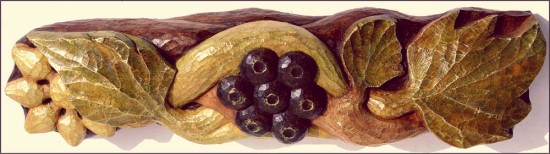
A two-day course at Woods Mill taught by Janine Creaye for those who want to learn the basic techniques of woodcarving whilst creating an achievable small relief design. This course will cover the best tools to use, tool sharpening, and wood staining. A short time will be spent on the reserve looking for natural inspiration. Sussex Wildlife Trust commissioned four carvings from Janine in 2011 and they can be seen at Woods Mill, in situ, or here. Sundays 13th & 20th July, 10:00am-4:00pm, £110 for both days. Course information sheet [PDF] and booking (only two places left).
Author: LocHist
B/lock your gates!
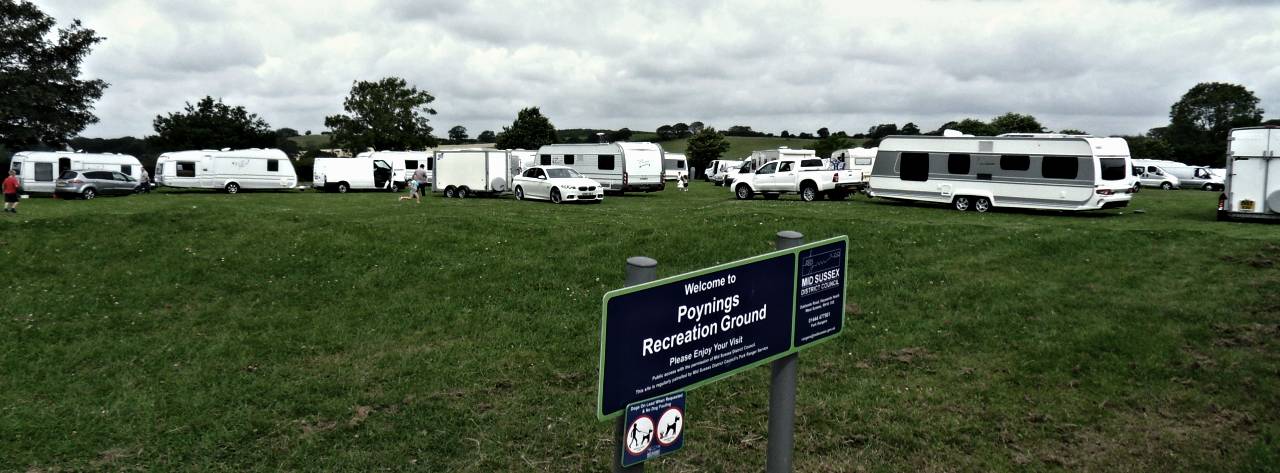
There’s an illegal occupation on the football field in Poynings, and the people may be moved on .. Mid Sussex District Council and Sussex Police are aware of this. If you have any issues about this occupation, phone Sussex Police on 101 (the non-emergency number), quoting crime reference 1487 of 26 June. As ever, if you see a crime being committed (or just about to be), phone 999 instead.
Richard Corner, 219
Postscript 1: roads into Poynings were blocked by the police last night and access to Fullking from the East was via Clappers Lane only. The roads are clear now but the occupation persists. The photo below was taken at around 11:00 this morning.
Postscript 2: the recreation ground had been vacated by 12:50pm.
FPC Planning 6:30pm 2nd July
Body found on Truleigh Hill
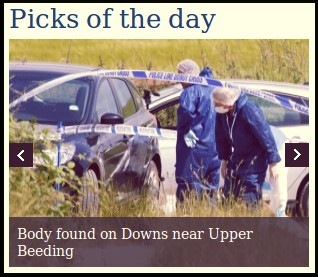
The Argus has a lot of additional information.
A23 still on schedule
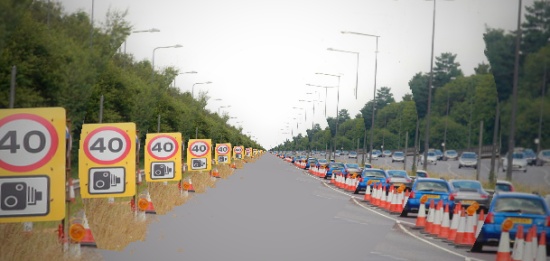
The West Sussex County Times reports:
Southbound traffic will be diverted onto the newly constructed carriageway in two phases, with the first planned in early July and the second at the end of July.
During the month, the southbound entry slip road at the Handcross junction — which has been closed since February while it was be rebuilt and improved — will be re-opened.
The work will be carried out overnight, between 8pm and 6am, and only one carriageway will be closed at a time. Dates will be publicised of the closures nearer the time.
Clearly signed diversions will be in place via the A264, A24 and A272.
Local history continues
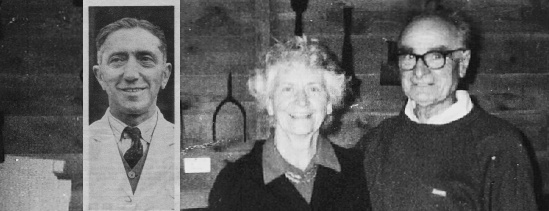
Percy W. Lucas
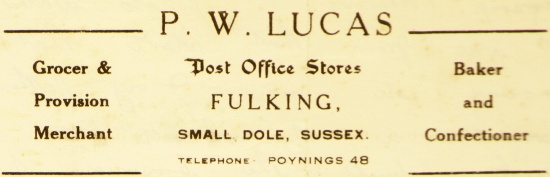
[This post consists of three items that partly document the life of Percy Lucas who was the village shopkeeper over the period 1920-1957.]
My predecessors started the shop situated next to the Shepherd & Dog as shoemakers in the year 1825-26. They took it as a cottage and dug the rock away and built the shop part. That was my great grandfather (Willett) and then my grandfather (Edward Willett) learned the same trade and carried it on there and his wife baked their own bread and started baking for a few others with hers. Presently it got to 20 top 25 loaves a day and a small bakehouse was added with wood oven and bread made from a ‘comp’ prepared with yeast (collected from Poynings Brewery) and potato water [1]. It was from that start that grocery etc. grew and my father (Obadiah Lucas) married a Miss Willett (Rhoda) and together built the business up. A Post Office was found to be necessary and my father was first postmaster. When the present premises became vacant about 50 years ago, they were acquired and we moved in bringing the Post Office with us and the present proprietor (P.W. Lucas) then about 12 months old. My grandfather (Mr. E. Willett) died in 1905 and my father carried on the business until 1920, when he left me to carry on. In 1939 my late son J.W. Lucas (killed in RAF) won a Gold Medal for Hovis bread; and we have also been awarded Diplomas for ‘Daren’ bread; made by our late baker Mr. Shepherd now of Small Dole and for National Bread made by yours sincerely P.W. Lucas.
[Notes on the history of his family by Percy Lucas, written for the Fulking Women’s Institute Village Scrapbook in 1947.]
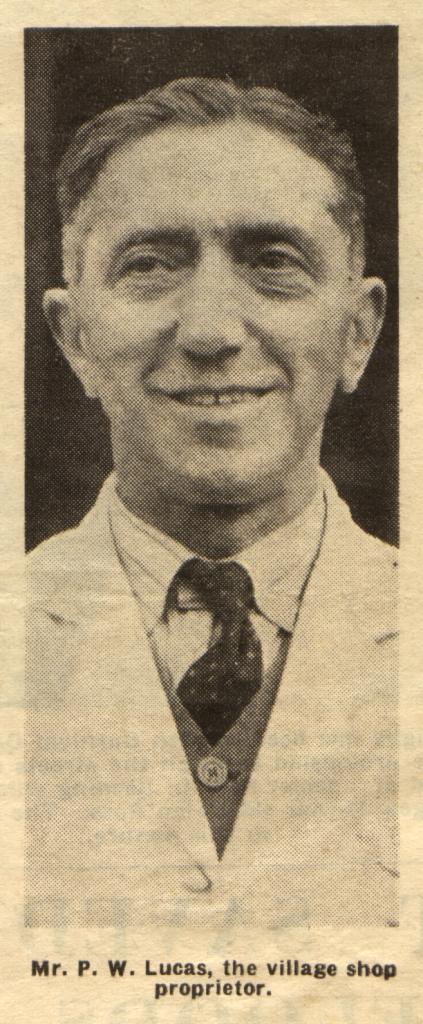
Next to the Old Farmhouse is the village shop which seems to stock everything. Mr. P.W. Lucas, the proprietor, knows the wants of Fulking folk. He is a lifelong resident of the village, moving with his family to the present premises from the Old Bakehouse (just above the Shepherd and Dog) at the age of 12 months.
Perhaps best described as a grocer’s shop, his is also the bakery (he bakes half the village bread, the other half being sold in the form of sliced, wrapped loaves) and the Post Office, and he is the sub-postmaster.
It is good bread that he bakes, too. He and his family are renowned for it and have won awards in widespread competitions.
Being the only shop in the village the Post Office has considerable responsibility. From it goes a very wide round of deliveries of groceries and bread.
Mr. Lucas himself has many memories of the days before the motor-vehicle made transport as easy as it is today. In those days the nearest means of communication was the now disused railway station on the Dyke. Everything had to be hauled by horse and cart round the tortuous road by Saddlescombe.
[Rambling Reporter at Fulking, Southern Weekly News, 18th June 1954]

[Letter from the Head Postmaster at Brighton to Percy Lewis in response to his letter announcing his intention to retire in April 1957.]
Footnote: ‘Comp’ is an abbreviation for ‘compound’, a type of barm.
Old Thatch

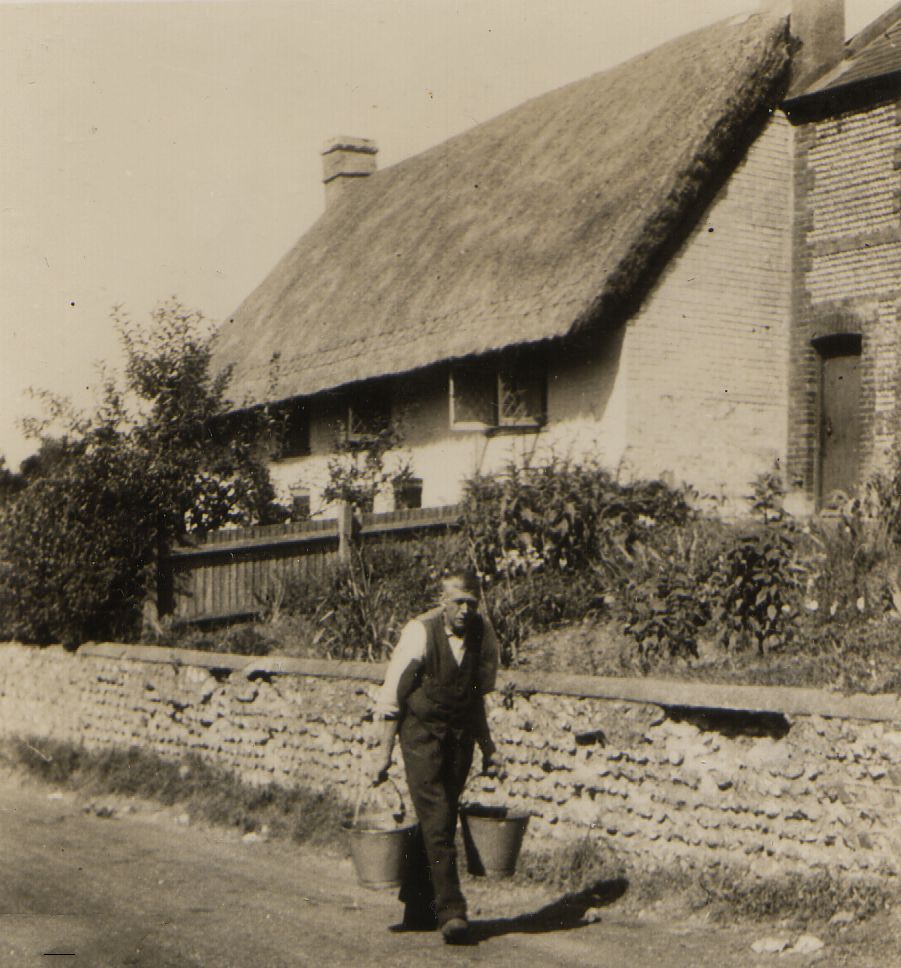
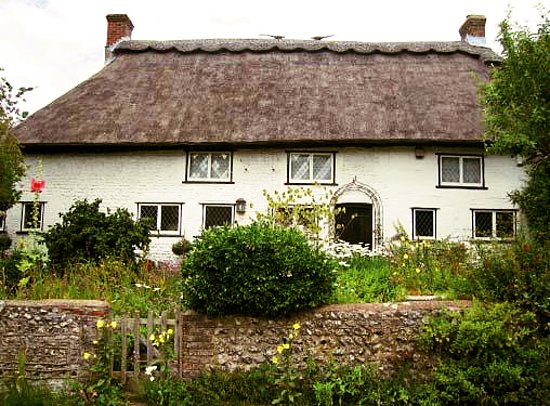
Old Thatch is a Grade II listed house on the north side of The Street adjacent to the North Town Field. Now a single dwelling, in the nineteenth century it comprised a terrace of four cottages. The listing details read as follows:
Probably C17. Two storeys. Four windows. Now faced with flints and brick, both painted. Thatched roof, hipped at west end. Casement windows.
Old Thatch was originally built in a hall (barn) style. It was constructed without ceilings or chimneys and a hole in the thatched roof allowed smoke from fires to escape. Hence, the roof beams are covered in soot. The house now has a large inglenook fireplace, reputed to be the only one in the village that does not smoke. The original building was timber framed with lath and daub infill, some of which is still visible at the rear of the house, and a brick extension was added on the west (left) side of the present front door. The original façade was destroyed at some time by fire and was rebuilt using flints. The front windows were originally small square panes of glass and the stumps of the window bars that were cut out in the 1920s to make way for the existing diamond shaped leaded lights are still evident. The marks where the four cottages were later merged into a single dwelling are still just about visible on the front elevation. Old Thatch has a cellar under the eastern end of the building with a drain that at one time discharged onto The Street. There is a well in the front garden, some eighteen feet deep, which is somewhat below the average level of the water table in the village. John Durrant (see below) sealed this well off — it was not filled in — and constructed a pond over it. Frogs and toads once inhabited the cellar under the house and they probably used the well to breed.
The nineteenth century census records are somewhat opaque with regard to the identity of persons living in the smaller houses in the parish. However, the order of names suggests that members of the Burtenshaw family were resident in one of the four cottages in both 1881 and 1891, with a branch of the large Lelliott family living next door in 1881. Both Amos Burtenshaw and Walter Lelliott were farm workers.
The house was vacant during WWII and during this time it was used as the headquarters of the 13th Platoon of the Home Guard. This included some thirty men from Fulking and Poynings There were three officers, four sergeants and two corporals. The youngest member was a mere fourteen years old and the oldest was about seventy. Their Captain was a Mr. Molesworth who lived at The Dean on Poynings Road. They paraded, and were inspected, in Fulking Village Hall every Wednesday night at 7:00pm by Sergeant Henry Harris. Every night, two members of the platoon patrolled the area. They were given the next half-day off work. Their orders were to raise the alarm if they saw spies or troops being parachuted in. They were also trained to shoot advancing enemy troops and blow up tanks that might cross the Downs during an invasion.
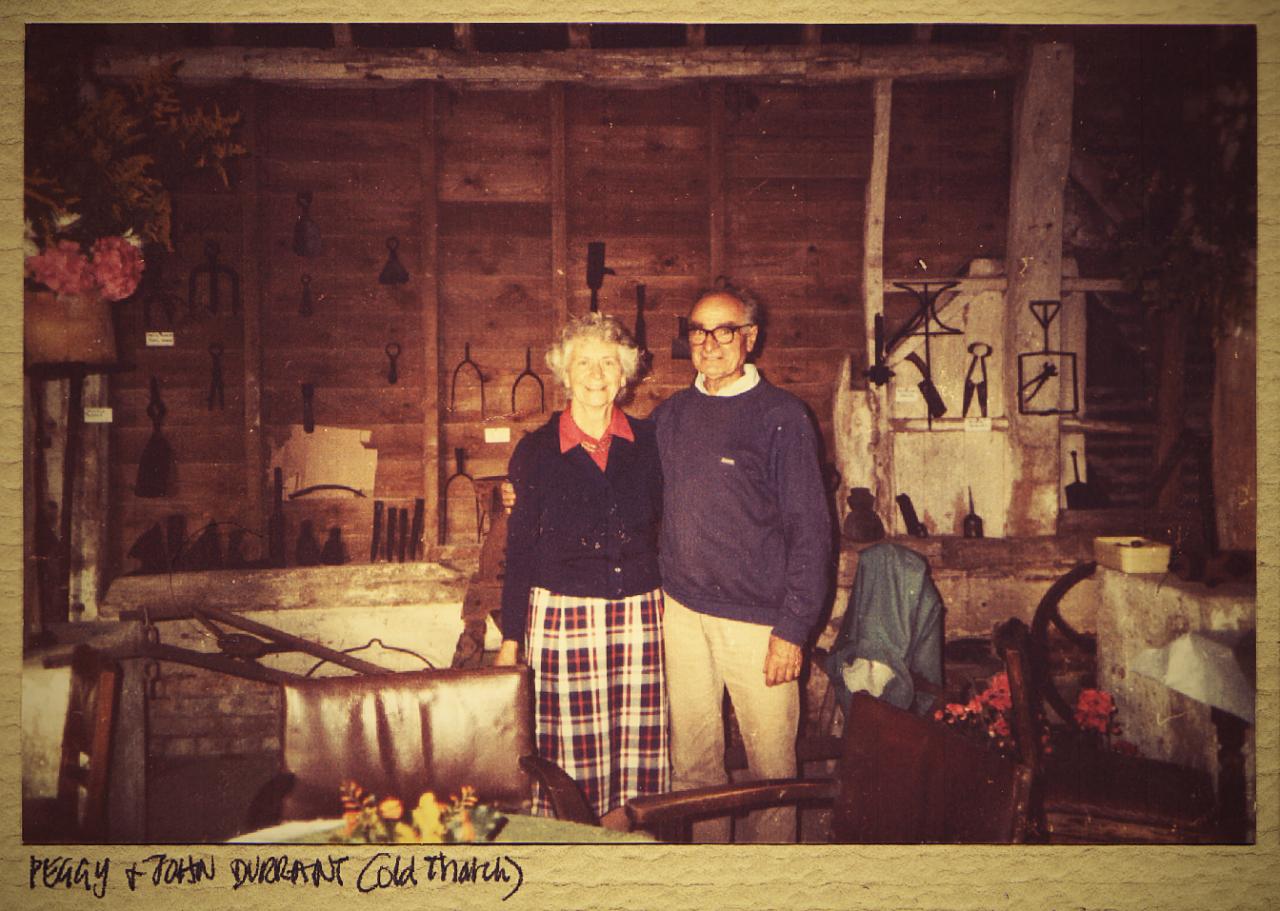
After the war, the house was purchased by the Wallis family. It was then sold to John and Peggy Durrant in 1953. John had been an RAF Squadron Leader in WWII and was awarded the Distinguished Flying Cross for his courage and devotion to duty while on active service. He was very much involved in the conservation of the village and spent a considerable amount of time, on a voluntary basis, maintaining the North Town Field. He always supplied electricity for village events in the Field and the present owners carry on this tradition.
John also did everything he could to save the village post office from closure. At the time, the Royal Mail assessed the financial viability of its premises by the number, not the size, of transactions carried out. So, every morning, John would deposit one pound in an account and in the afternoon withdraw it, thus ensuring that the number of daily transactions was boosted. Regrettably this ploy failed to save the post office.
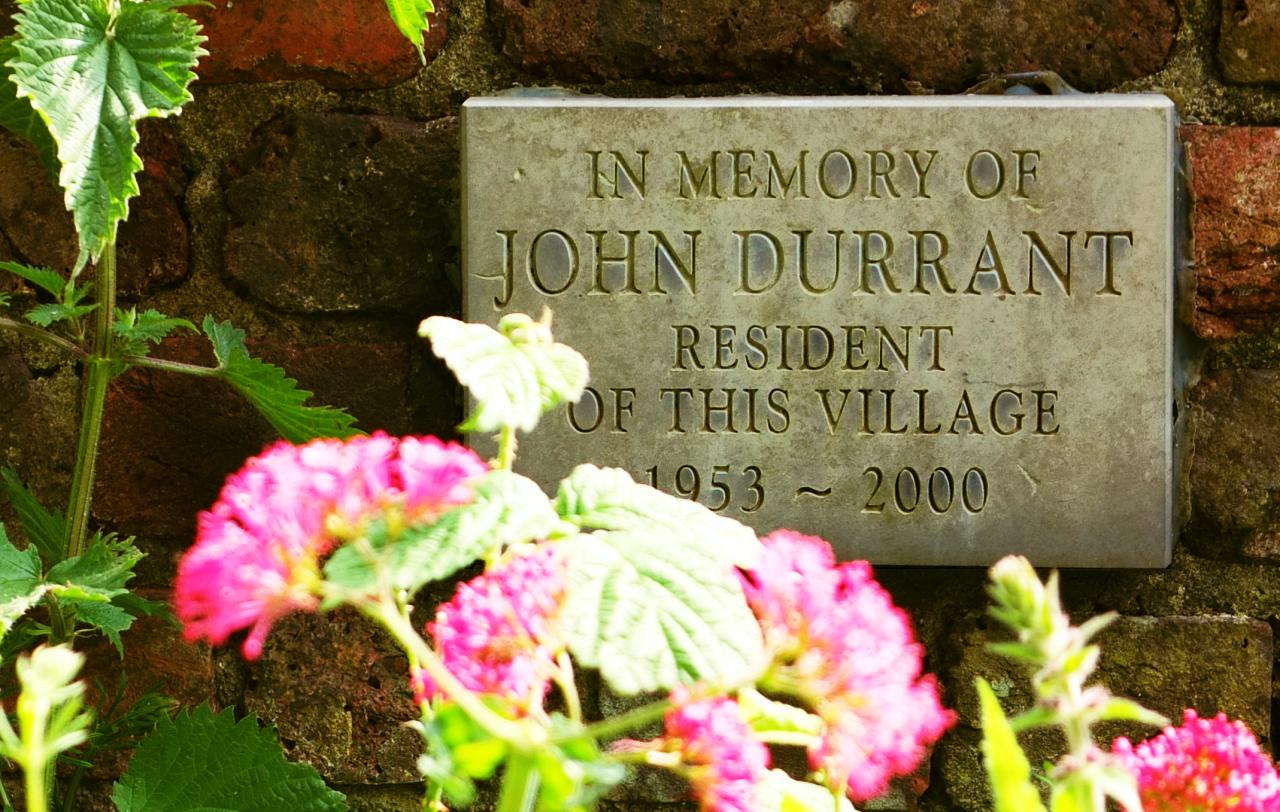 A plaque on the outside of the west boundary wall of Old Thatch, just inside the entrance to the North Town Field, commemorates John Durrant’s life in Fulking.
Tony Brooks
[Copyright © 2014, Anthony R. Brooks. Adapted from Anthony R. Brooks (2008) The Changing Times of Fulking & Edburton. Chichester: RPM Print & Design, pages 160-161, 235, 292, 404, 441.]
Hassocks Station plaque
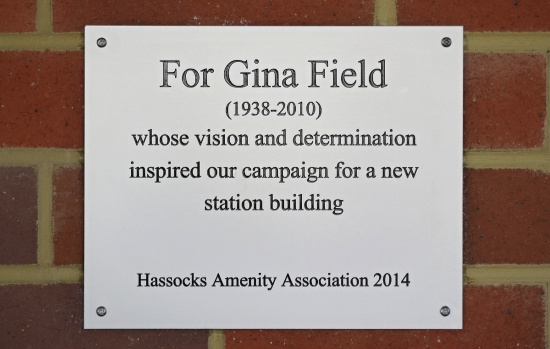
Fulking residents will remember Gina Field as one our MSDC Councillors, when she came to Fulking PC meetings. By 2003, Gina had taken a back seat at the PR business she founded (Field McNally Leathes PR) — still based in Hurstpierpoint.
One of her key local campaigns was to persuade the train companies to retain frequent services through Hassocks Station, and also to improve the indifferent 1970s station building. She always saw Hassocks as a vital stop on the London to Brighton line, and a gateway station for the forthcoming South Downs National Park.
Hassocks Station was rebuilt and opened in July 2013. The improved underpass opened a few weeks ago, and it allows disabled people to use lifts to traverse the station, whether they are rail travellers or not.
This plaque is now at the main entrance to the station.
Richard Corner
Horsdean traveller site gets ministerial approval
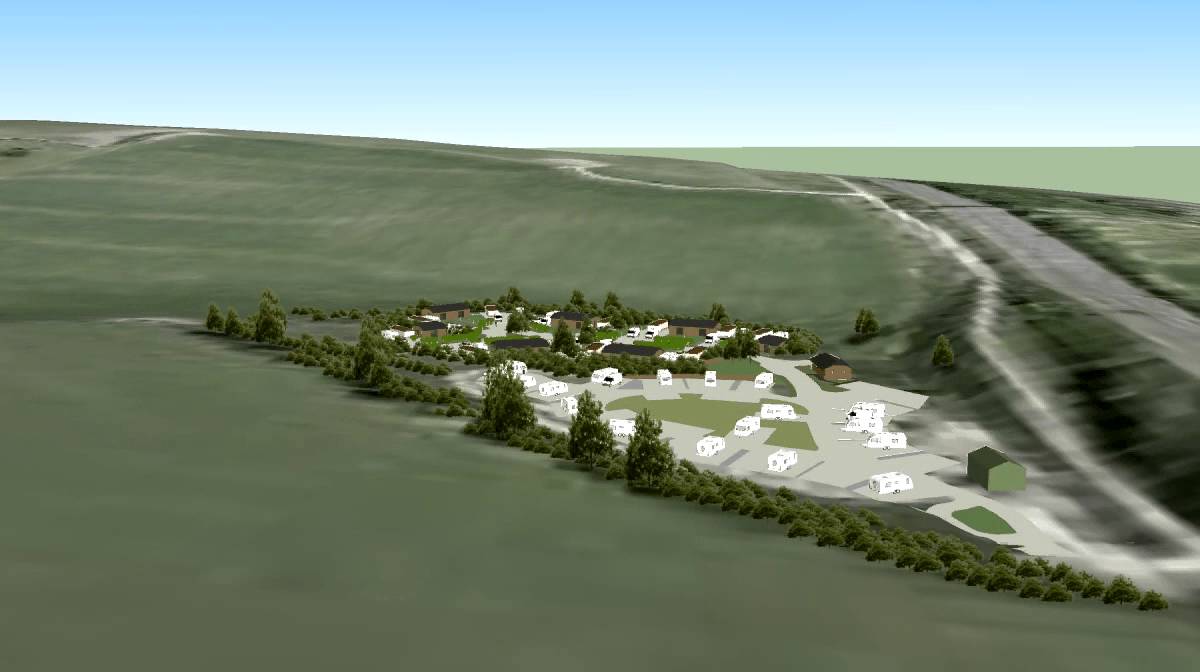
The Argus reports:
The Department for Communities and Local Government have confirmed that they will not be calling in a planning application for 12 permanent residential traveller pitches at Horsdean .. the Secretary of State confirmed the site will be given the go-ahead following his scrutiny. Brighton & Hove City Council will now be able to go ahead with their plans to create the site, which extends and improves an existing traveller transit site just to the east of Patcham on the north side of the A27.
Earlier coverage here.