Month: May 2013
Walk to Henfield
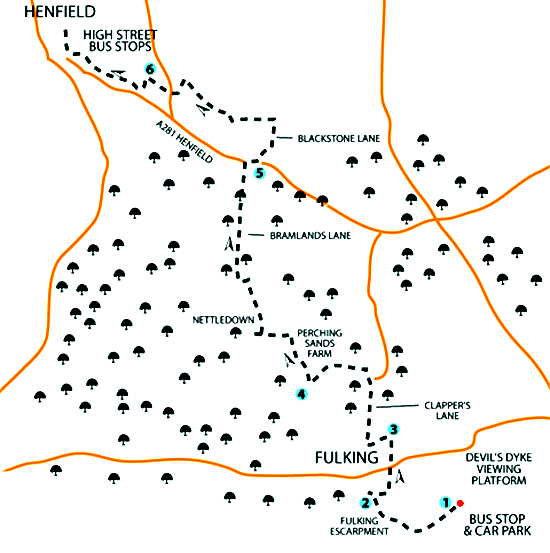 For those who haven’t already done the walk, Eddie Reader provides instructions at The Argus. His map (above) has a certain visual appeal, but you would be better off clutching a copy of OS Explorer 122.
Round about the cauldron go
Fulking Village Fair – Sunday 28th July 2013
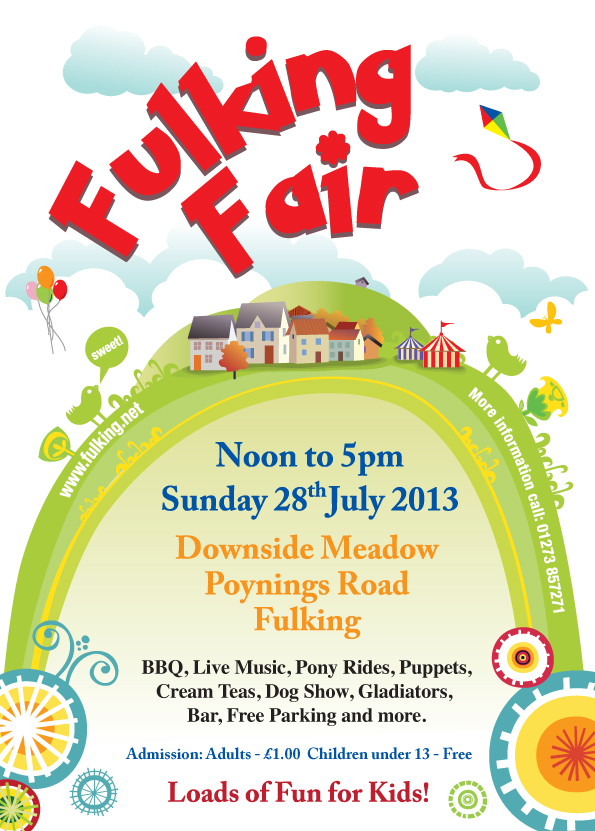 Fulking Village Fair – Sunday 28th July 2013
Downside Meadow – 12 noon till 5pm
A must for everyone’s diary, cancelled last year due to bad weather the social committee for the Fulking Village Fair have worked hard to ensure this year’s fair will be even more fun for all the family.
Children’s games and entertainment, Pimms, local ales, homemade cider, Birds of Prey, live music including Brighton City Singers, homemade cakes, ice creams, cream teas, Sussex Wildlife Trust, Dog Show and over 45 various stalls & country demonstrations.
We look forward to seeing you there.
Fulking Village Fair – Sunday 28th July 2013
Downsview Meadow – 12 noon till 5pm
Nomads top Premier League
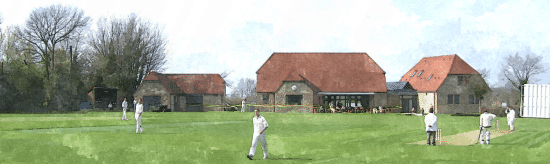
Last year’s Champions Preston Nomads top the Sussex Premier League after four games ahead of Cuckfield and East Grinstead following a three wicket win at Three Bridges .. Horsham are within five points of the leaders who they meet at Fulking next Saturday.
SDNPA HQ: Progress Report
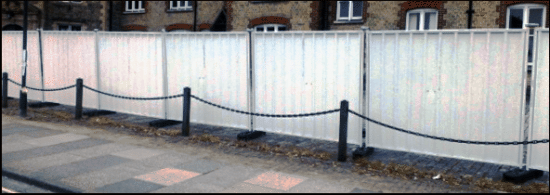
Town councillors in Midhurst are losing patience. Colin Hughes said “I wouldn’t mind if there was work being done, but there is no indication of any work whatsoever”. Gordon McAra said he was very concerned about the obtrusive fencing around the SDNPA’s Capron House property with apparently little happening behind it. Earlier this month the Midhurst and Petworth Observer revealed that the cost of the project had soared from £1.5m to almost £3m and was continuing to spiral despite little work having yet been carried out. A spokesman for the SDNPA said “we are looking at how we can improve the hoarding”.
Fulking Potluck Party – 8th June 2013
 Come along to the Pot Luck Party in the Village Hall on Saturday 8th June at 7pm!
The idea is to make it as informal as possible so that everyone can get involved by making their favourite food. And to make it hassle-free we’re cutting down on washing up by asking everyone to bring along their own plates and cutlery.
Just let us know what you’re planning to cook to make sure we have a good range. We might have oodles of salads but be desperate for puddings. Or we might be short on savouries so we might ask if you can bring along that type of dish.
So what’s left to bring? …the booze, of course!
Email Paula on paula@hazzy.net or call evenings on 957
Action in rural Sussex – Orchards
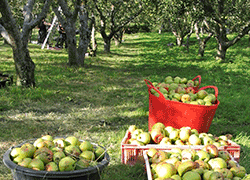 Action in rural Sussex and Brighton Permaculture Trust have now guided over 70 community groups and schools through the process of designing, planting and maintaining a small orchard (and occasionally , a larger orchard!). If you have ever thought that you would like to help the landscape of Sussex to be as fruitful as it once was, or to share with a new generation the pleasures of fresh orchard fruits and local apple varieties, just click on the link below. Community orchards offer a fantastic opportunity to grow an array of apples and other fruits you won’t find in the shops, are a haven for all kinds of wildlife, and are lovely places to enjoy, at all times of year.
http://www.brightonpermaculture.org.uk/community-orchards
Please do get in touch to find out more or ask any questions. Email me on this address for all orchard enquiries:
anne-marie.bur@brightonpermaculture.org.uk
Anne-Marie Bur
Co-ordinator Local Produce
PLEASE NOTE NEW DIRECT LINE NUMBER!
Direct Line: 01273 407310 Mobile: 07849 233294
 Action in rural Sussex
Sussex House
212 High Street
Lewes
East Sussex
BN7 2NH
Tel: 01273 473422
Fax: 01273 483109
Action in rural Sussex is a registered charity, number 1035401
Perching Barn
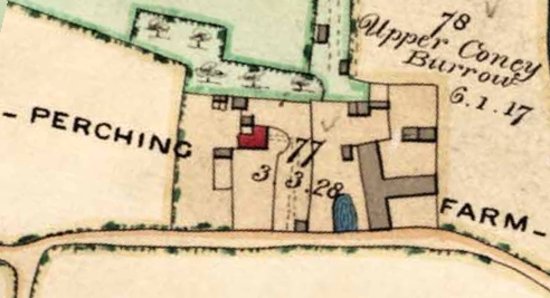
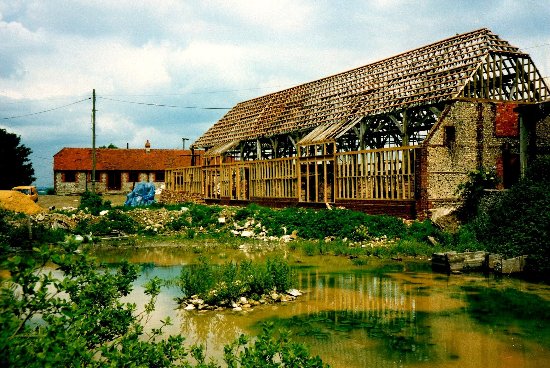
Until relatively recently, Perching Manor was a farmhouse and the area to its immediate east was the farmyard. There had been a farmyard in that location for hundreds of years. Farm buildings come and go, of course, but the largest building dates back to the eighteenth century. Houses have human residents who leave a history. We know quite a bit about the history of Perching Manor itself and even of the fortified building that preceded it and of the manor more generally. But farm buildings give rise to few records. The owls, rodents and feral cats who take up residence pass through anonymously, untroubled by police, lawyers, census takers and registrars of birth, death and marriage. Thus most of what is known about the history of this now former farmyard is of recent vintage — the last eighty years or so.
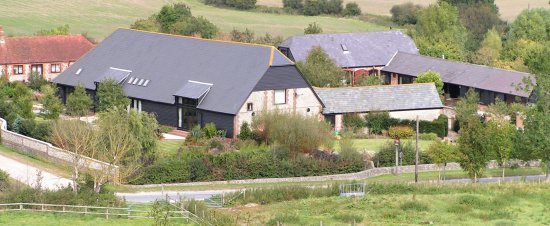
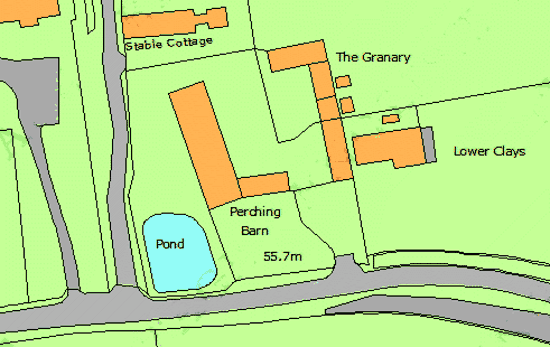
The largest, and most distinguished, component of the farmyard is Perching Barn. This is a Grade II listed eighteenth century building with weather-boarding on a flint base. The roof is slate, hipped at the north and half-hipped at the south. A large building today, the map shown above suggests that it was quite a bit larger still in the mid-nineteenth century.
Perching Barn was a fine example of a Sussex threshing barn. It had a wide entrance in the centre of the (long) side that faced west and was high enough to allow a threshing machine to be positioned and operated in the centre of the building. Sheaves of corn were loaded from both sides of the machine and the grain was then stored on either side of the building. Once threshed, the straw was ejected from the back of the thresher to the outside of the building. When not in use during harvest it was available for other uses — such as village barn dances and parties.
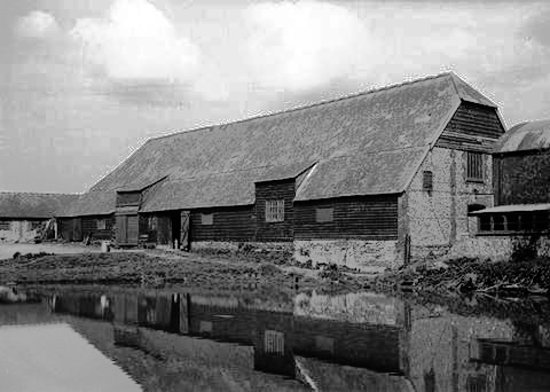
To the immediate north of the barn stood a stable for the farm horses. In later years, as tractors replaced horses, it was used as a storage shed and workshop. To the north east, there was a two-storey building, with cattle pens at ground level and a grain and cattle feed store above. Feed was delivered to the cattle as required, via a chute. Calf pens and a storage shed were situated at the south end of the building.
Some time during the 1930s or 1940s, a man known only as Martin lived in the lower half of a two-storey barn situated behind this building, on ground that fell away sharply towards the stream to the north east. It seems that he was ex-army and well educated, but chose to live there on an earthen floor, using old sacks as bedding. From time to time he became very ill and was moved to the workhouse at Chailey, but as soon as he recovered he would walk back to his simple home in Fulking. It is thought that his income was mainly from an army pension, but he supplemented this by chopping wood and doing odd jobs at Perching Manor for which Henry Harris is thought to have paid him 10 shillings a week.
George Greenfield was the local tramp. He may have been the George Greenfield who was born in Steyning around 1884. He lived rent-free in the ‘duck hut’, an open fronted, lean-to shed located at the southern edge of the farmyard. The shed had an open front and faced Perching Drove and the pond. George walked with a stick and had a dog. He was well known around the village and on most evenings could be found sitting in the same place at the Shepherd and Dog. He was known as the ‘threshing machine feeder man’ as this was his job when the contractor arrived in the district for the autumn/winter threshing period. In summer he did no work at all. Like Martin, his bedding was sacking and he hung sacks across the front of his hut to keep out the wind and rain. He cooked on a brazier and in winter he moved this inside the hut to provide heat. However, this meant that the hut filled with smoke, as there was only a small gap just below the roof for it to escape through. When he became ill, George was also taken to the workhouse at Chailey, but once recovered, he too always walked back to his shed, where he eventually died.
As farming became more mechanised, the barn was divided up. Half was used as a grain store, whilst the other half became a milking parlour and dairy. Later, Brian Harris, who was the farmer at the time, switched to arable production only. This decision was brought about partly because it was becoming impossible to find a cowman prepared to work the unsocial hours associated with livestock production and partly because of changes entailed by European Union farming policies. As a consequence, the barn became largely redundant.
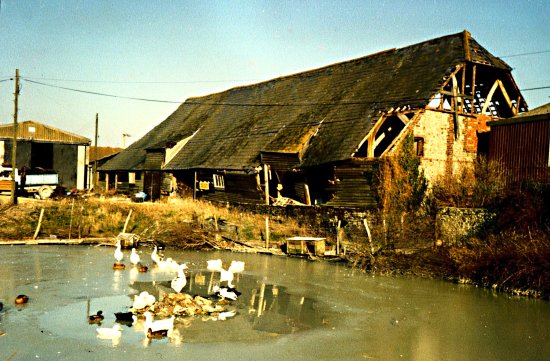
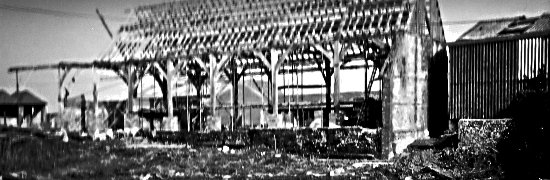
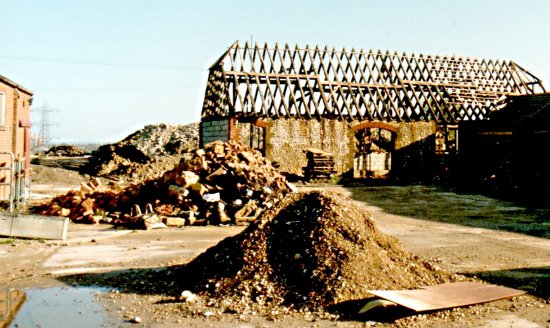
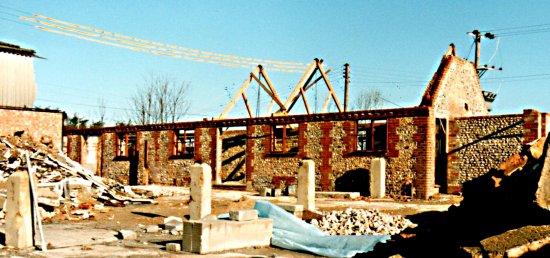
In 1984 the Crown sold Perching Manor Farm to the National Freight Corporation. The latter sold it to Brian Harris in 1986. In the same year, Terry Willis, a developer trading as Sussex District Estates, came to Fulking and started buying redundant farm buildings for conversion to private dwellings. This was not straightforward as most had agricultural restrictions attached to them, but once these were lifted and planning permission had been obtained, the development programme began. In 1987, Brian Harris sold his redundant and derelict farm buildings to Willis. The sale included the barn, the stable and the grain store/cattle shed. Terry Willis, with the aid of an imaginative architect and some competent builders, converted these dilapidated buildings into attractive private residences during the 1990s (see the appendix below).
Tony Brooks
[Copyright © 2013, Anthony R. Brooks. Adapted from Anthony R. Brooks (2008) The Changing Times of Fulking & Edburton. Chichester: RPM Print & Design, pages 182-185.]
Appendix
The 1990s Willis development process in pictures:
Currently popular local history posts:
Nature Tots
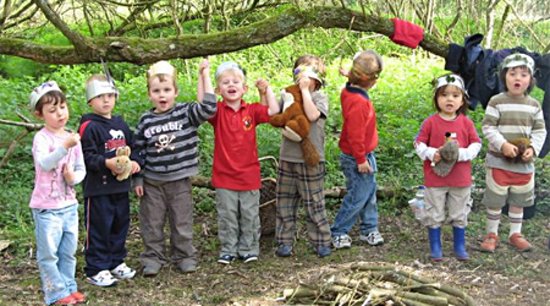
The Sussex Wildlife Trust has developed a Forest School programme specifically for pre-school age children (2-5 year olds) starting at Woods Mill Nature reserve. Nature Tots is a brand new programme focused around getting pre-school children engaged in wildlife and outdoor activity. More information here.