Bobservation No. 145: The Last Post

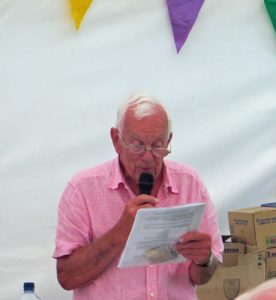
In the spirit of Bob Rowland, who died last week, it seems appropriate to make some observations on how to be a key part of the local community.

It helps to live in the community for decades, be on good terms with everyone around you and to have a beautiful bluebell garden which you open to all every spring. More formally, you can get involved in the Parish Council and support it long after you finish your term. Or perhaps run a Social Committee to protect village activities and assets. But how do you fund these? Well, you could run an award winning Village Fair, or you could hold an annual Call My Bluff wine evening and tell a few ‘edgy’ stories to spice things up a bit. Later in life you can reflect on village matters, world affairs or social inequity every month in the village newsletter or website. Then maybe become involved in regular quotations meetings to debate the deeper philosophical topics with other villagers.

Bob did all of these things and much more – of course supported and encouraged by Pam.
He was a true gentleman and an example for us all of what community involvement means. Fulking will miss him.
Edburton Tithe Map

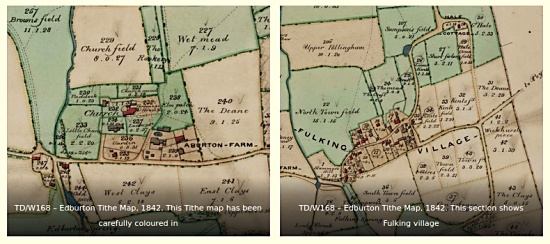
This website frequently makes use of clips from the Edburton Tithe Map of 1842 to illustrate posts. Not a lot has changed hereabouts in the last 180 years so the map is still both useful and attractive. If you have ever wondered how such a map came to be, then the West Sussex County Record Office has an interesting recent post by Abigail Hartley, their Searchroom Archivist. She uses Edburton as an example of a tithe map that is still in superb condition. The map shows the ecclesiastical parish of Edburton, the area served by St. Andrew’s, and thus shows all of Fulking, together with Edburton proper.

The map is still available from the Record Office (details via the link above). Local walkers are probably best advised to order the JPEG version and copy it to a tablet or mobile phone for consultation in situ. Unlike a large scale OS map, the tithe map does not mark the status of routes as ‘bridleways’, ‘public footpaths’, etc. If you are relatively new to the area, and plan to use the map for walking, then you may want to use an image editor like Photoshop to copy those indications over from OS Explorer 122.

A tithe map, like the Domesday Book, is ultimately about taxation. To that end the Edburton map uses colour to distinguish between the buildings then used for human habitation (red) and all the others (grey), typically agricultural buildings for animal accommodation or feed storage. That distinction alone tells us quite a lot about mid-C19 activity in the central section of The Street (between the pub and the building now known as Yew Tree Cottage).

Another feature of the tithe map, not shared with any of the various iterations of OS maps, is that it records the names of (all!) the fields. These names are often full of information, thus ‘Fulking Mills’ is located just where two of the local spring streams merge, an ideal location for fulling mills; ‘Coneybeare’ and ‘Upper Coney Burrow’ were probably both once sources of rabbit meat, the latter conveniently placed for the Perching Manor dinner table; ‘The Rookery’ and ‘Hog Pasture’ need no translation; and nor does ‘Boggy Lagg’ if you make the mistake of traversing it in mid-February with the wrong shoes on.

Local defibrillators

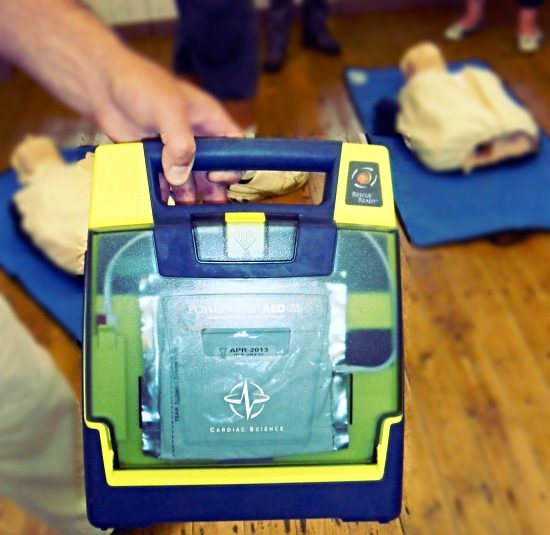
Defibrillator in Fulking Village Hall
You probably know where the Fulking defibrillator is. And that may be all you need to know — if you never leave the village. You may even know where one of the Poynings defibrillators can be found. But what about Upper Beeding? Could you locate that one in a hurry? Small Dole? Does Bramber even have one? And Steyning — it must have some — but where are they? The answers can now be found on our new Local Defibrillators web page (linked under ‘About Our Village’ in the left sidebar menu). There is also a PDF version for you to print out and keep in the car.

Thirty year anniversary: A Walk .. restored

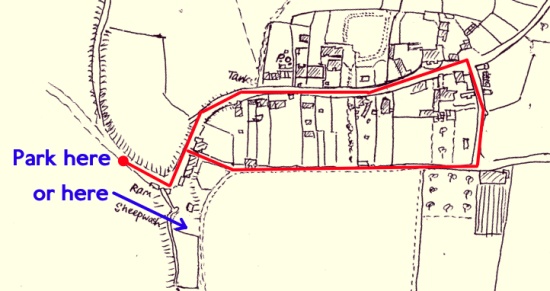
A Walk Down The Village Street In Fulking
Villagers who arrived in Fulking too late to visit the shop can now help themselves to a free PDF copy of Stuart Milner’s sixteen page pamphlet A Walk Down The Village Street In Fulking thirty years after it originally went on sale there. If you ever have house guests that you don’t know what to do with, then cramming a paper copy into their hands should keep them out of your kitchen for at least an hour. The corresponding web page has also been rejuvenated and now has links to other relevant historical material on the website. Click on the map above for all the details.

[Thanks to Gill Milner, Clive Goodridge and Tony Brooks for their help with this restoration project.]