The Steep Grade Railway 1897-1909

The Steep Grade Railway 1A
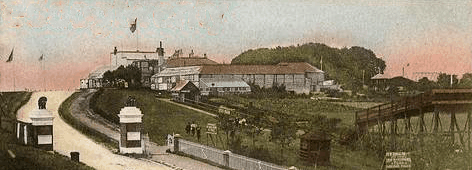
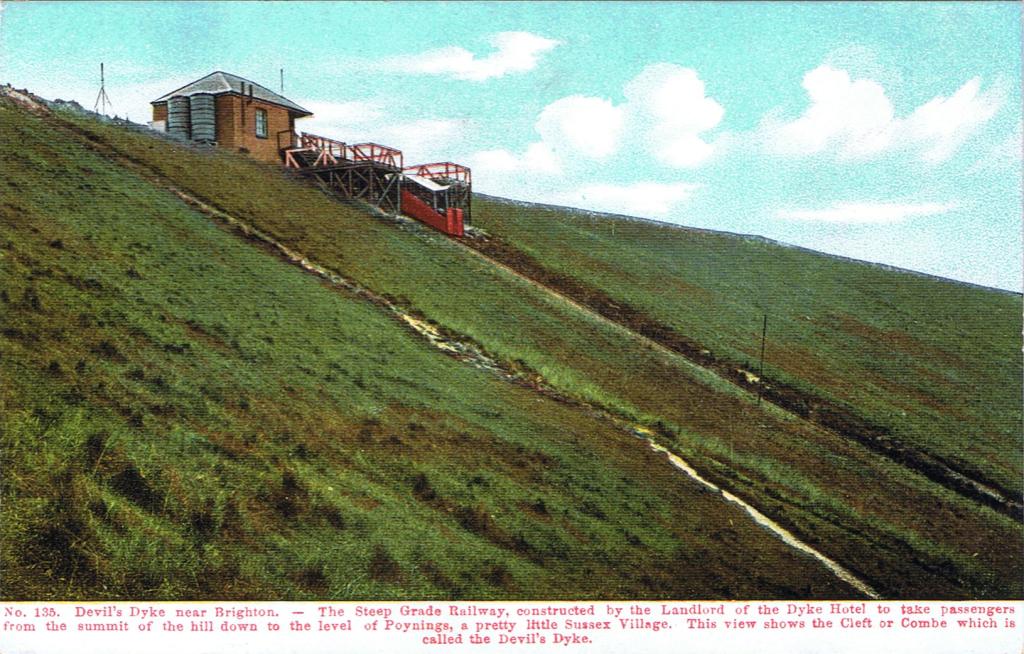
The engine house/station, platforms and one of the two cars (in red) — note the two large cylindrical water tanks adjacent to the engine house.

James Henry Hubbard, the great Victorian entrepreneur of Dyke entertainment, conceived of linking Poynings to his amusement park with a funicular railway in 1896. It was designed by Charles O. Blaber who was also the engineer for the railway that linked Brighton to the Dyke and it was constructed by a yacht building firm from Southwick. The funicular was built in six months and opened in July 1897. Unlike the aerial cableway that had opened three years earlier, the funicular was not at the leading edge of engineering design. Funicular railways first appeared in the sixteenth century and were in common use throughout the world by the end of the nineteenth century. At least so far as the UK was concerned, 1897 was almost the end of the funicular era. For example, the industrial funicular built at Offham Chalk Pit in East Sussex in 1808 had been shut down in 1870. A company that still builds funiculars today reports that none were constructed between 1902 and 1992. The only unusual feature of the Steep Grade Railway is that it was built inland. Almost all UK passenger funiculars have been built in coastal towns (there are two in Hastings, for example). The best known exception to this seaside generalization is the funicular at Bridgnorth in Shropshire. Like those in Hastings, this little railway remains in use today. But the Bridgnorth funicular links two halves of a town, not a tiny village and an isolated hotel cum funfair. With the benefit of hindsight, the Steep Grade Railway made no economic sense at all.
The Steep Grade Railway 2A
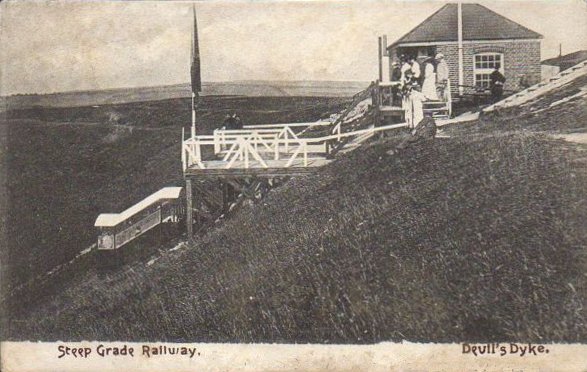
Another view of the engine house/station at the top of Dyke Hill

A funicular railway is one in which a cable is looped round a pulley at the top of a slope and two cars are attached, one at either end. One car ascends as the other descends. In the ideal world of school physics, the two cars exactly balance, cables have no mass, and gravity can be removed from the equation. The only role of the associated engine is to overcome the forces of friction. In the real world, the cars almost never balance (passenger numbers will differ, for example), wire cables are heavy, and changes in the gradient mean that the gravitational pull of the cars depends on where they are on the tracks. So the engine has some serious work to do.
Hornsby Ackroyd oil engine 1904
The engine in the case of the Steep Grade Railway was a water cooled 25HP Hornsby Ackroyd oil engine similar to the Crossley engine that powered the aerial cableway. The engine ran continuously and was combined with an elaborate clutch and braking system.
The Steep Grade Railway 3
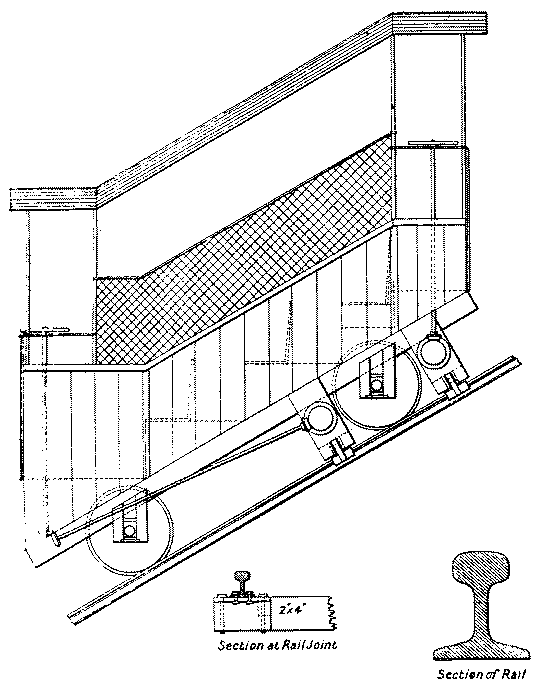
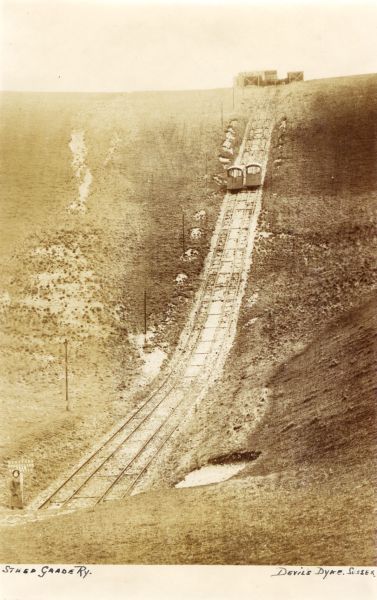
The cars were open and had seats for twelve passengers plus space for a conductor and bicycles. They moved at a sedate 3mph along a 3ft narrow gauge track. The track was 840ft long spread over three different gradients and rose to a height of 395ft. There was a brick platform at the bottom of the track and spring buffers, but no station. A newspaper report published a few days after the opening ceremony tells us that:

The cars do not move rapidly but are kept well under control from first to last. They travel easily, and smoothly, and there is an utter absence of anything in the way of sensation. The journey is certainly a curious one, but that is all. Of course it is pleasant, the cars affording a charming view of the country, and there is the further attraction of the novelty of the whole thing. [Brighton Gazette, 29th July 1897, quoted by Clark 1976, pages 56-58.]

A couple of weeks later, the same newspaper reported (indirectly) that the August bank holiday traffic on the funicular was at the rate of 400-600 passengers per hour. “Good business”, as they put it. But it wasn’t to last.
The Steep Grade Railway 4
The Steep Grade Railway viewed from the bottom of the track showing a passenger waiting and the two cars passing.

By 1899 the company that owned and operated the Steep Grade Railway was effectively bankrupt and the railway itself had stopped working. More money was borrowed, the railway was repaired and then, in 1900, it was sold at auction to the original owners for less than 5% of the original building cost. Operations resumed and continued until 1908 or 1909. James Henry Hubbard himself had emigrated to Canada in 1907 after getting into financial difficulties. Although the funicular was used to ship provisions up to the hotel, as well as produce en route to Brighton by rail, it may nonetheless have contributed to Hubbard’s difficulties: the day-trippers from Brighton upon whom he relied for most of his income undoubtedly used it to visit the tearooms in Poynings and Fulking, thus reducing custom at the various eating establishments and other attractions that he ran at the top of the Downs. Meanwhile, a direct bus service to Poynings had been introduced — which surely made the rail route to Brighton over the Dyke seem much less attractive to residents of that village. The Steep Grade Railway was finally dismantled and removed around 1913.
The Steep Grade Railway 5A
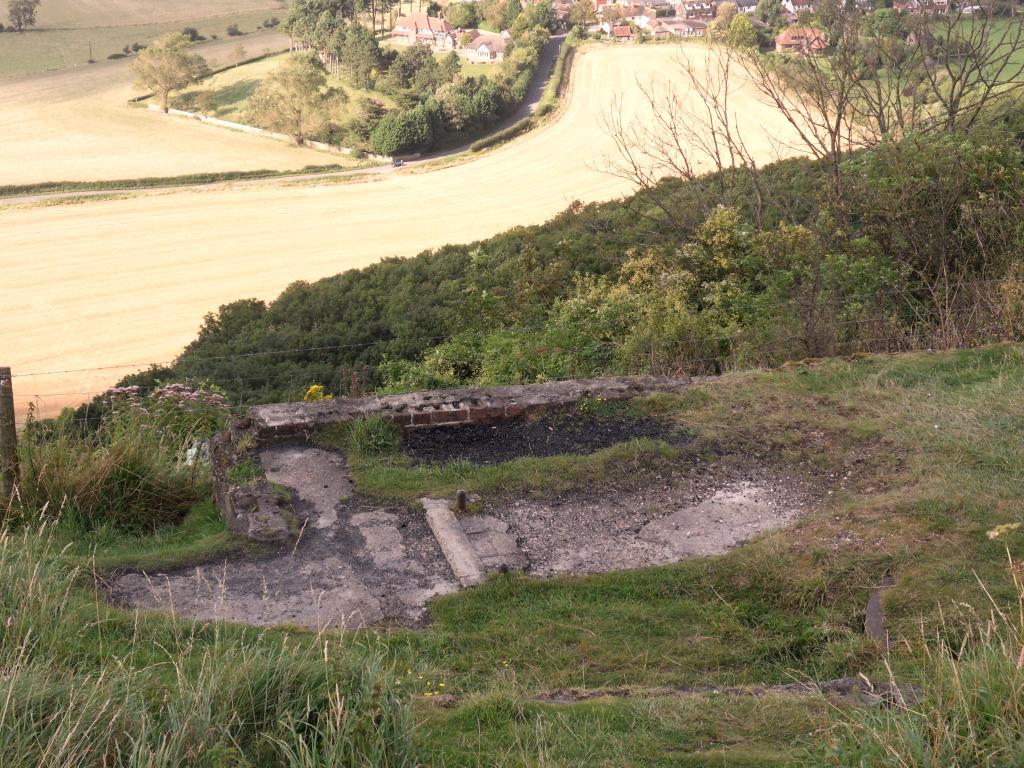
All that remains today — the foundations of the engine house

If one stands at the western edge of Poynings on a sunny evening and looks up at the Downs, the route that the funicular track took can still be seen quite clearly, looking much as it did one hundred years ago.

References and further reading:

  • Paul Clark (1976) The Railways of Devil’s Dyke, Sheffield: Turntable Publications. Chapter 5, pages 52-62. [Although long out of print, this booklet remains the best source of information about the Steep Grade Railway. It contains plenty of ceremonial, commercial, financial and technical details that are not repeated here.]
  • Carole Hampson (2009) Poynings Yesterday. Hove: StewART Publishing Services. Pages 141-142.
  • Ernest Ryman (1984) The Devil’s Dyke: A Guide. Brighton: Dyke Publications. Pages 7-9.
  • Ernest Ryman (1990) Devil’s Dyke in Old Picture Postcards. Brighton: Dyke Publications. Pages 20-23.
  • South Downs National Park Authority (2013) Offham Chalk Pit near Hamsey, East Sussex. SDNPA flyer.

GJMG

Updated May 2017.

Some other material relevant to the C19 and C20 history of the Dyke:
The Shepherd and Dog

The Shepherd and Dog in the 1780s
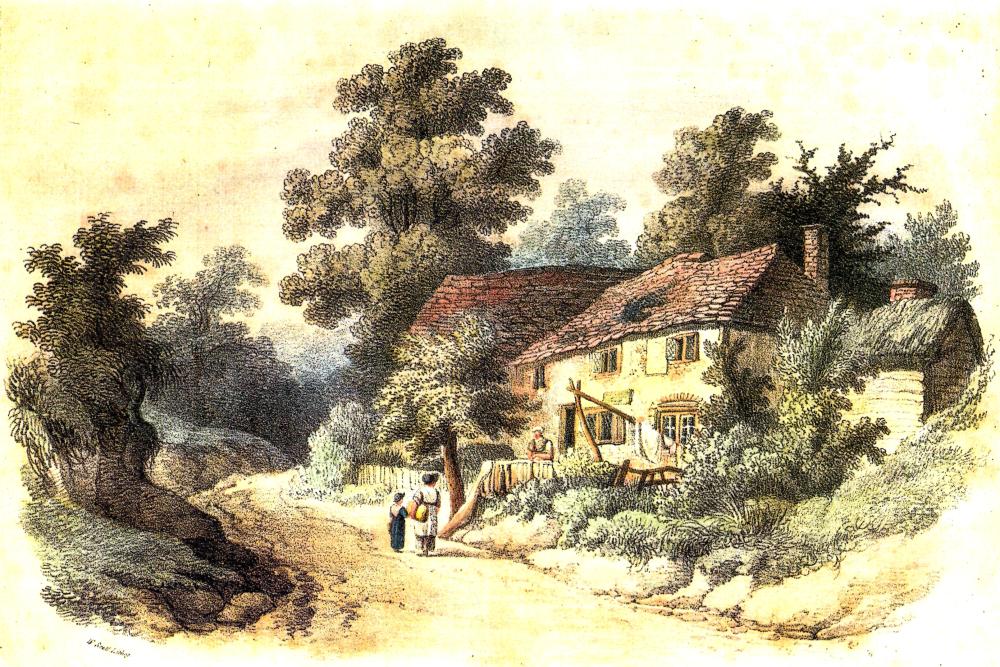
The building in the 1780s: a lithograph by W. Scott after a painting attributed to William Henry Pyne (aka Peter Pasquin)

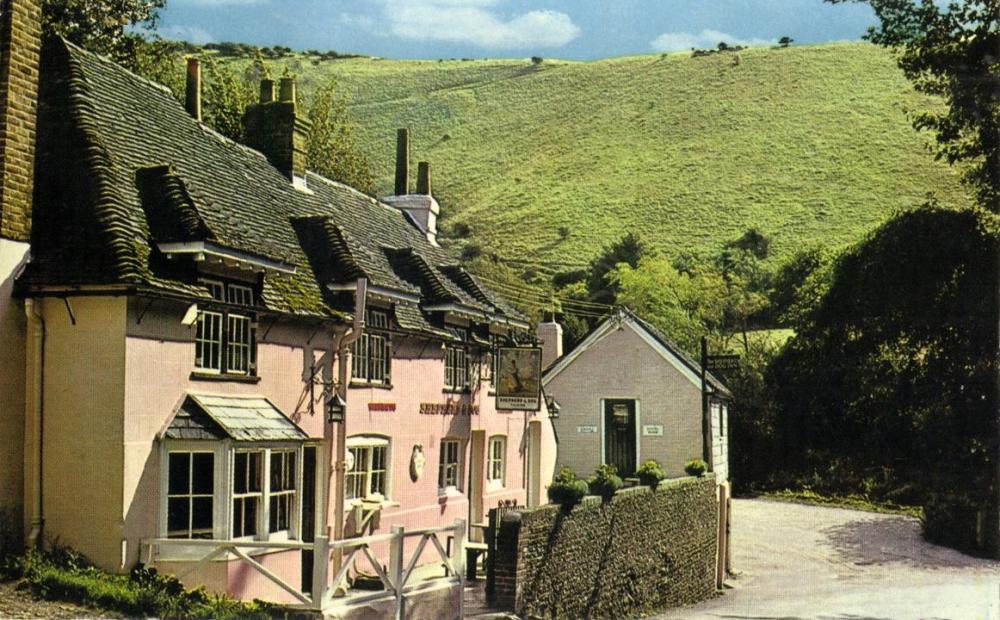
The main building originated as two, or possibly three, cottages. Its use as a public house probably dates from the early 1800s and it is listed as ‘Shepherd & Dog’ in the 1841 census. It seems safe to assume that it derived its name from the annual sheep washing that took place in the stream immediately outside as described by Nathaniel Paine Blaker in his memoir of a childhood in Fulking in the middle of the nineteenth century. As he records, the pub played a key role in this event since it was the place the shepherds went to recover after spending hours in the bitterly cold water.

Sussex was renowned for smuggling in the early nineteenth century (Blaker has a brief chapter on the topic) and the pub was used to store contraband. It seems that the goods were first taken up the outside steps and then lowered through a concealed opening into a large cavity below. The location of this hiding place is not currently known, although there is anecdotal evidence that it may have been incorporated in structural changes made to the pub over the course of time. A reporter from a local newspaper is thought to have been shown it in 1927, so there may still be a large chamber waiting to be found — complete with a keg of brandy.

The Shepherd and Dog in the 1900s

In 1841, William and Frances Welling were living at the Shepherd and Dog with their two children and a twelve year old female servant. The census lists William as a bricklayer so it is possible that Frances ran the pub. By 1851, the pub had passed into the hands of James and Susannah Strivens (aka Strevens) who were living there with their four children and a fourteen year old female servant. Members of the Strivens family had been living in the parish since the eighteenth century, and possibly earlier. James was born in Fulking and is listed as ‘victualler’ (i.e., the publican). By 1861, their family has doubled in size. In 1871, there are four sons still living at home and working as agricultural labourers. James died at the end of that year, aged 49, and Susannah took over as publican. In 1881, one of her daughters is working there as a barmaid and there are also two sons still living at home Frank, a butcher, and Arthur, a market gardener. It may well be that the relevant market garden was part of the property of the pub. By 1891, Frank has taken over the pub and is living there with his wife Louisa and two infant children. Also resident is a niece from Portsmouth working as a barmaid and a fourteen year old female domestic servant.

The Shepherd and Dog in the 1920s

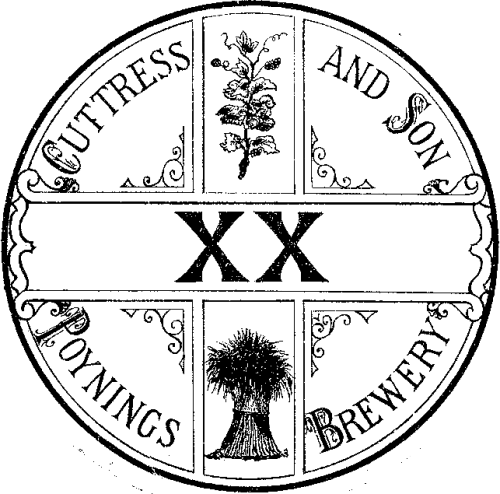
The records show that, in 1925, the Shepherd and Dog was a quiet place, used mainly by the villagers, with a very large and productive vegetable garden at the back that stretched up to the foot of the Downs. Beer was delivered in a horse and cart by Nobby Richards, who later lived at 23 Clappers Lane. It was not unusual for some of the local lads to ‘borrow’ the odd bottle of beer whilst Nobby was busy unloading. At that time, the beer itself came from the brewery at Poynings which had been opened in 1851 by Samuel Gumbrell, run by members of the Cuttress family, many of whom lived in Fulking or Edburton, for seventy years from 1855, and then, for the period 1925-1940, became Molesworth’s Poynings Brewery Ltd (Holtham 2004, page 8).

Cuttress and Son Poynings Brewery 1900s
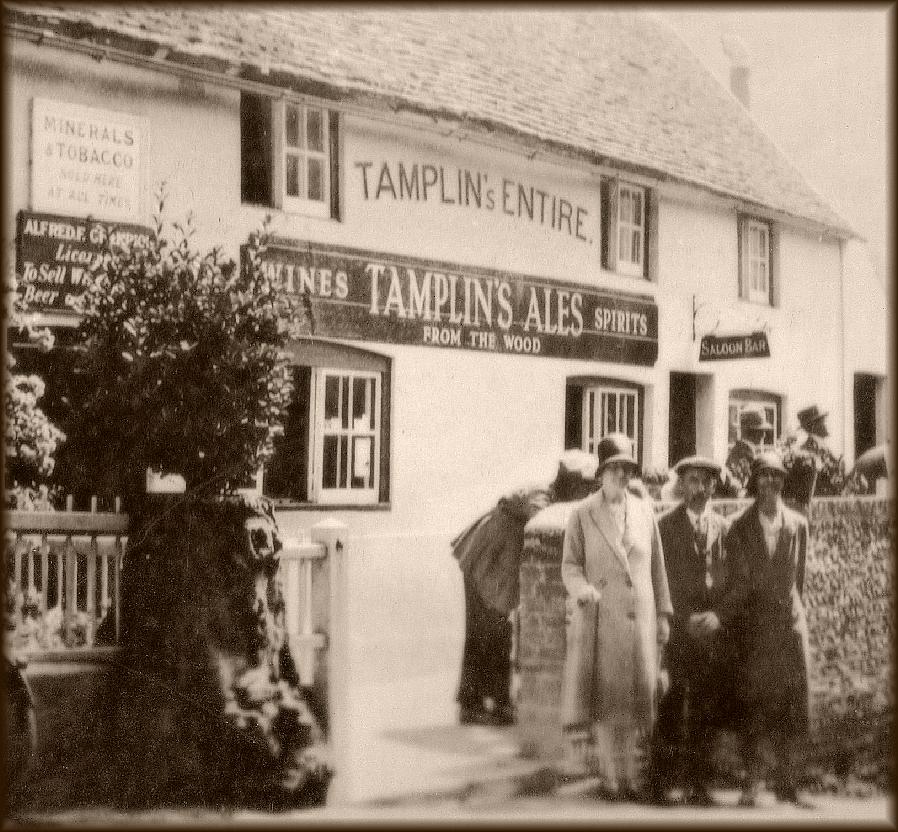
During the 1930s, the landlord was Eugene Baldey, whose father was known for running a rather dubious shoot and who was often seen selling game or rabbits at the back of the pub. The pub in those days consisted of two bars: the public and the saloon. The public bar had sawdust on the floor as the farm workers and locals usually came in wearing muddy shoes or boots. The saloon bar was carpeted and used by visitors and the local gentry. It was separated from the public bar by a wall with a serving hatch in it. All drinks were dispensed from the public bar and when someone in the saloon wanted a drink they knocked on the hatch, placed their order and it would then be passed through to them. It was often the case that the same drink in the saloon bar cost a penny more than in the public bar. Lemonade was made on the premises up to 1939, a practice that was resumed for a while after the end of WWII, and the pub’s own cider was legendary. Along with this, children could go to a small window beside the front door, known as the Bottle and Jug and buy a biscuit for a halfpenny. In the 1930s, the young Geoffrey Harris used to buy ten Gold Flake cigarettes for his father, Henry Harris, from the window. These cost sixpence and the kindly landlord would always give him a chocolate biscuit.

The Shepherd and Dog in the 1940s

The landlord throughout World War II was Jack Wiseman. During the war, the pub’s trade was reduced to a handful of local people, along with a few Land Army girls and Canadian soldiers billeted in Fulking and Poynings and some British soldiers stationed at Devil’s Dyke and Edburton. For the entire war, Jack was stationed at the King Alfred in Hove, then a training station for naval officers, in charge of naval transport, a position that entitled him to a special petrol allowance and enabled him to return to the pub every evening, often in the company of naval officers who would return with him the following morning. This was a time when bartering and shady black market deals were carried out in many pubs and there were tales of young ladies prepared to grant certain favours to Canadian and American troops in exchange for a pair of nylon stockings, the latter being almost impossible to obtain during the austere wartime conditions.

After the war Captain Cyril Watts, a Canadian Officer who had been previously billeted in the village for the D Day Invasion, returned to the village and took over as landlord, assisted by his wife Kay and sister-in-law Joyce. Cyril was a colourful character. There are stories of him leaning out of one of the upper windows on occasions clad only in pyjamas, shouting at the full moon. Another time, having discovered his wife was having an affair, he hung from an upstairs window until he fell although, as it turns out, he did not injure himself. This was considered to be sufficiently noteworthy to be reported in the News of the World. Later, he was accused of bigamy.

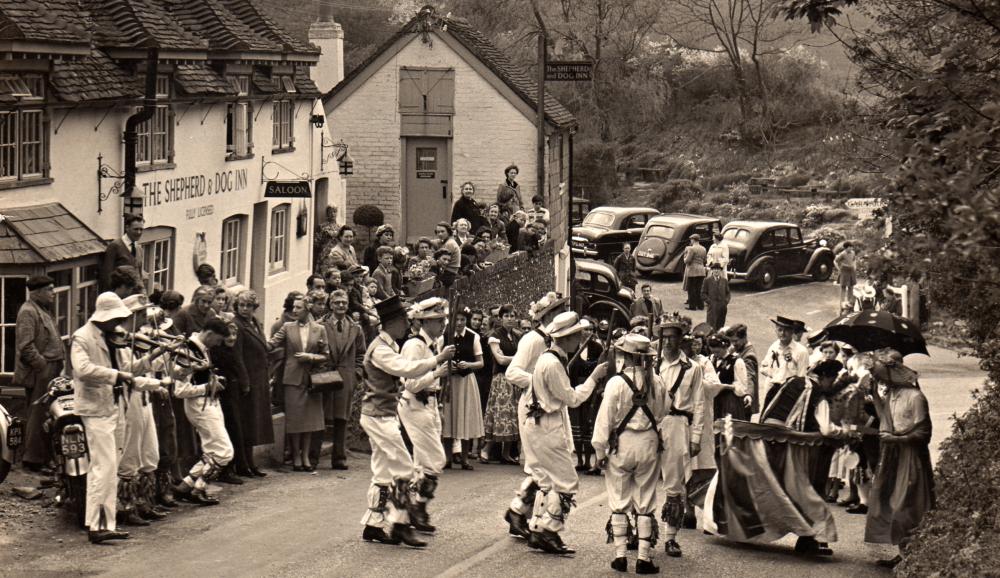
Morris dancers outside the Shepherd and Dog in 1945
The BBC filmed Morris dancers at the Shepherd and Dog in 1945. A photograph taken at the same event was published in
The Times and featured in the newspaper’s calendar the following year.

In the 1940s and 1950s, like many country pubs, the Shepherd and Dog was the focal point for local social activities including a darts and a very successful clay pigeon shooting club. Film shows were featured, children’s Christmas parties were held there and Morris dancing, a regular attraction from 1945, continued up until 2001.

The Hunt Meet in 1946
The Hunt Meet outside the Shepherd and Dog in 1946. They used to meet there every year but an anti-hunting landlord later discouraged it and the hunt moved to the Royal Oak in Poynings where the meet has become a well established tradition.

Before and after the war, up to the 1950s, cream teas were served in the pub gardens when the weather was fine and if it rained, they were served in a green tin shed where the modern brick kitchen now stands. After the floor of the shed collapsed, teas were served in the pub where the dining area is now. With the war now in the past, trade started to improve and the Shepherd and Dog began to grow in popularity. Bob Champion became the next landlord and was known to the locals as ‘Captain Bird’s Eye’ because of his very large, bushy beard.

During the 1950s and into the 1960s, Bill Hollingdale, the village poet and a well known local character, would often recite poetry in the pub for entertainment. The cue for his party-piece was when a young man came into the pub with his girlfriend. Bill would lose no time in making himself known to the couple and on finding out the young lady’s name, he would then quickly adapt a suitable piece of poetry to include it and then recite it to her in a very loud voice to a now silent pub. Being flattered by this attention the girl would insist that her boyfriend should at least buy Bill a pint. He earned quite a few pints this way.

The Shepherd and Dog in the 1960s

In 1964 Bob Cruickshank–Smith and his wife Ruby took over as landlords and, in 1965, invited Geoffrey Harris’s firm Springs Smoked Salmon to start serving cold lunches with salad, offering a choice of smoked salmon, trout, pheasant, partridge, and chicken. This was highly successful but had to be discontinued the following year as the main smoked salmon business was expanding so fast they were unable to maintain a regular supply to the pub. By now the structure of the brewery industry was starting to change. Small, privately owned pubs were gradually being bought up and combined into small groups, usually by a brewery, which meant that landlords were now tenants rather than freeholders. The Shepherd and Dog became part of these changes and when Tamplins brewery bought it, Bob and Ruby moved on. Stan Liquorish took over until the mid 1970s with his wife Joan. He was a popular and successful landlord whose deputy, Stan Taylor, later became the landlord of The Plough at Henfield.

From the mid 1970s until the 1990s, Tony Bradley-Hole took over the Shepherd and Dog. In 1978, at the time of the Queen’s Silver Jubilee, a fancy dress parade for children took place along The Street in Fulking, finishing with a tea party for the entire village in the pub car park, hosted by the Bradley-Holes. Later that year the pub also organised a torchlight procession through the village which culminated in a bonfire and firework display, on what is today, the front lawn of Cannonberries on the Poynings Road. Similarly, for the wedding of Prince Charles and Lady Diana Spencer, the pub offered breakfast to start the day. Villagers then went home to watch the ceremony on television and returned to the pub afterwards for food, drink and a celebration that lasted until midnight. Tony Bradley-Hole was followed by a succession of landlords and during this time it seemed that as soon as a new landlord had built up a good reputation for food, service and a warm welcome at the Shepherd and Dog, the lease would be sold on. There would then follow a slight fall in the pub’s popularity while the next landlord, possibly with a different approach to the business, built up trade again. In January 2006, Geoff Moseley and Jenny Tooley purchased the lease of the pub from Badger, an independent family brewery operated by Hall and Woodhouse, and initiated a major refurbishment.

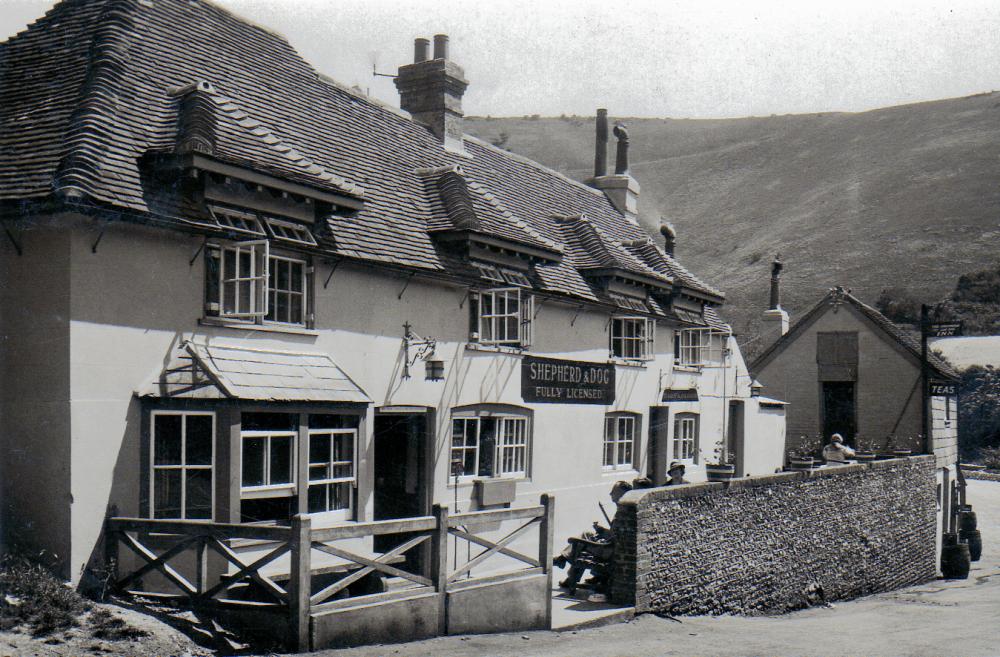
The Shepherd and Dog in 2007

Architectural notes:

The Shepherd and Dog comprises two Grade II listed buildings. The main building is timber framed, has two storeys wholly faced with stucco, sits on a chalk terrace above the road, and dates from the seventeenth century or earlier. It has a hipped tile roof and casement windows, a bay window on the ground floor, and four hipped dormers on the first floor. The dormers are twentieth century and date from the interwar years. The adjacent stables also has two storeys and casement windows but dates from the eighteenth century. The first floor is slate hung and the ground floor stucco.

Tony Brooks

References

  • Nathaniel Paine Blaker (1919) Sussex in Bygone Days. Hove: Combridges.
  • Peter Holtham (2004) “The brewers of West Sussex”. Sussex Industrial History 34, 2-11, PDF.

[Copyright © 2013, Anthony R. Brooks. Adapted and condensed from Anthony R. Brooks (2008) The Changing Times of Fulking & Edburton. Chichester: RPM Print & Design, pages 9-18.]

Currently popular local history posts:

The Aerial Cableway 1894-1909

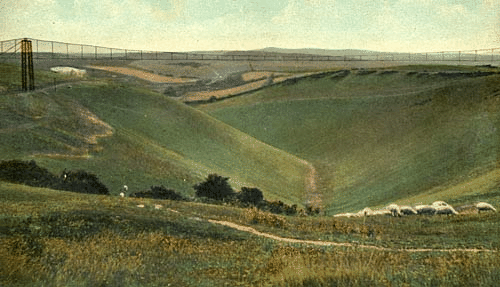
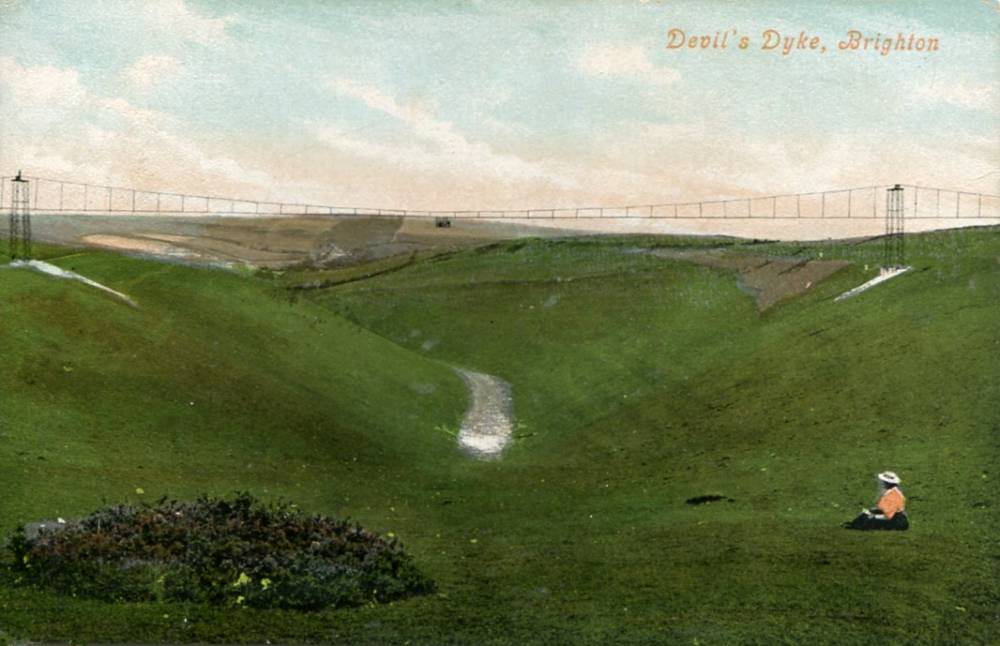
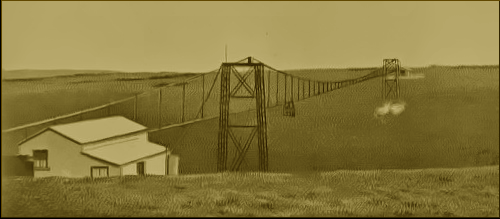
The aerial cableway across Devil's Dyke
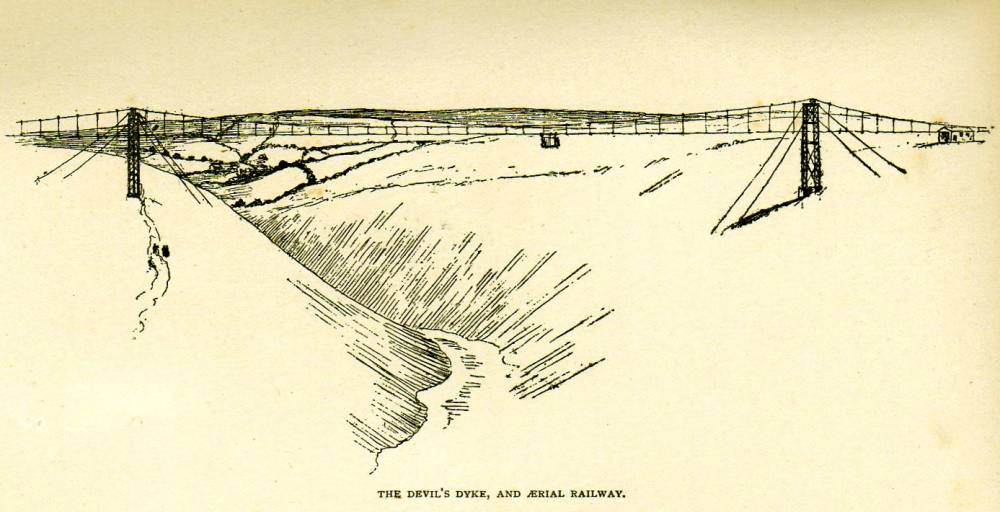
As the illustrations on this page attest, there was once an aerial cableway across the chasm that has become known as the Devil’s Dyke. An early representation of it is a rather primitive sketch that appears in a book by William Axon that was published in 1897, some three years after the cableway opened.

William Axon 1897 Bygone Sussex. London: William Andrews & Co., facing page 142
The caption to Axon’s drawing refers to an ‘aerial railway’ rather than an ‘aerial cableway’ which is the term that Clark (1976) uses. Many other terms are used in the literature on such systems: ‘aerial ropeway’, ‘cable car system’, ‘overhead tramway’, ‘passenger ropeway’, ‘suspension railway’, ‘wire rope tramway’, and so on. However, since Clark’s booklet is the best available published source on the Dyke installation, his terminology is adopted here.

The aerial cableway circa 1902
The Dyke Railway had begun services in 1887 and James Henry Hubbard, the most energetic Dyke entrepreneur, had bought the hotel and the estate in 1892 and immediately set about exploiting the increase in visitors that the opening of the railway permitted. Thus, on a single public holiday in 1893, he was able to boast of 30,000. The aerial cableway was but one of Hubbard’s ambitious portfolio of attractions designed to boost the visitor numbers yet further. It was first mooted in 1893 and constructed in 1894. It was designed by William Brewer, a civil engineer and inventor.

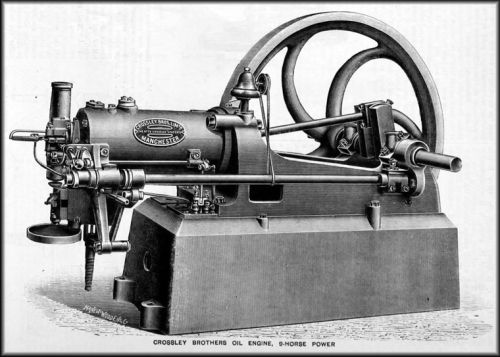
The installation consisted of 12,000ft of cableway stretched across the ravine. The track cables were suspended from a catenary cable by a series of cast metal supports, having two arms extended outwards and joined to the catenary cable by a vertical rod. The track wheels supporting the cars passed over these anchors, and they were adjusted to preclude all possibility of their running off the tracks. One set of wheels controlled the opposite set. The cars were moved by an endless cable worked by a Crossley’s patent oil engine adjacent to the north station and not by electricity as envisaged in the original proposals. [Clark 1976, page 47]

A 9HP Crossley Brothers Oil Engine from 1892
A 9HP Crossley Brothers oil engine from 1892

One particularly novel feature was the continuity of the line which passed through supports at stated intervals. In other contemporary systems the line would be confined to two given points, necessitating the unslinging and restarting of the cars. There were two cagework cars in use, each seating four passengers and the time taken to cross from one side to the other was about 2 minutes 15 seconds. There were small stations either side of the ravine approximately 1,100ft apart. The height of the cableway from the base of the chasm was 230ft and the clear span between the two huge iron columns supporting the catenary, and embedded in solid masonry, was 650ft. .. The cable rails were less thick than the catenary cable and even if one of the cables parted the stability of the cars would not have been affected, the support provided by the duplication of cables ensuring the cars being maintained in an upright position. [Clark 1976, pages 47-48]

Looking across the Dyke from north to south
Looking across the Dyke from north to south: note the station to the left and the rectangular gap in the pylons through which the cars and the endless cable passed — a key feature of Brewer’s design.

There are three useful ways to evaluate the cableway: (i) as a magnet for day-trippers to the Dyke; (ii) as a public transport link between Poynings and Brighton; and (iii) as an engineering demonstration. These will be considered in turn.

  1. Attracting day-trippers to the Dyke?
    We can safely assume that this is what mattered most to James Henry Hubbard. But, with the passage of time and the absence of any statistics concerning the popularity of the individual attractions that Hubbard had assembled in his nineteenth century theme park, it is impossible to tell what difference the erection of the cableway made or whether the same investment deployed on other attractions would have done better. Paul Clark is sceptical:

    Although the aerial cableway had a good start there is evidence that traffic steadily declined in the early years of the new century; indeed Mr. Hubbard suffered financial difficulties and he was eventually to emigrate to Toronto in 1907. Without the promotion of Mr. Hubbard the cableway’s future was uncertain and it eventually ceased to operate around 1909 although there is no evidence to suggest the exact date. [Clark 1976, page 51]

  2. An important transport link?
    Several writers have suggested that the cableway performed a significant transport function. A Poynings resident could take the steep grade railway to the top of the iron age fort, walk a short distance to the cableway, cross the Dyke, alight, walk a slightly longer distance to the Dyke Station, and catch a train for Brighton. And vice versa, of course. It sounds rather plausible. It even looks plausible when you inspect a 2D map of the locale: if you draw a straight line between the steep grade station and the Dyke station then that part of the line that crosses the Dyke exactly coincides with the route of the cableway. However if you look at a contour map, or simply walk the site, then the plausibility evaporates. The Dyke is not the Grand Canyon. You can just walk round the western end and bypass it. You will end up walking about an extra 500 yards but you will have avoided queuing to buy a ticket, waiting for a cableway car to depart, and spending over two minutes in the air in an open cage enjoying the wind along with the views. Assuming a normal walking pace, getting from the steep grade station to the Dyke Station would have taken at least 9.5 minutes if you used the cableway and at most 12.5 minutes if you simply skirted the Dyke and walked the entire distance. The cableway could not be justified on public transport grounds.
  3. A significant engineering demonstration project?
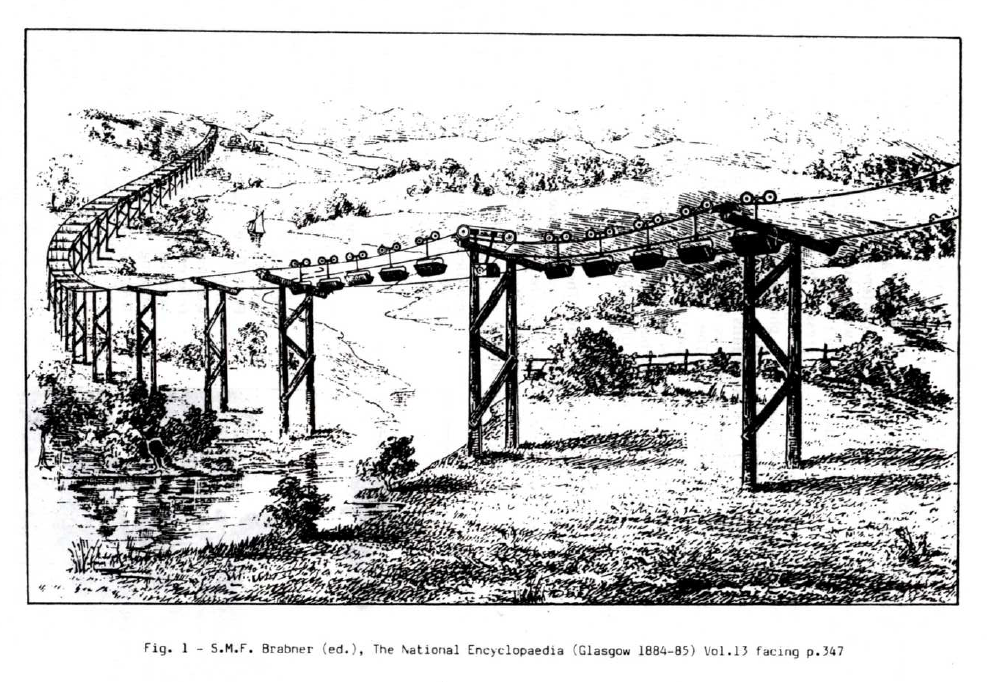
    As we have seen, there is no reason to suppose that the aerial cableway proved to be a great success as a theme park ride. Nor did it make any significant contribution to public transport on the Downs. But Brewer was an engineer and his cableway was a highly innovative piece of engineering. To substantiate this, we need to delve into the history of cableways. Aerial ropeways have been in use for industrial and military purposes for hundreds of years and must date back to not long after the invention of rope itself. However, the modern aerial cableway only became possible after the invention of sophisticated steel cables in the latter half of the nineteenth century. Brewer did not invent the modern cableway — such systems were in use for moving ore, coal, and similar materials prior to 1894. One such system, the Telpher Line, came into operation in Glynde in 1885 and was used to move bricks from a clay pit over a marsh to a goods siding at the railway station (Pope 1987). Most industrial cableways of the period used a single cable both to suspend the car and to pull it. Those uses conflict. You want a strong (hence thick and stiff) cable to carry the load but a flexible (hence thin and light) cable to tow the car. A single-cable system normally had to involve a compromise. In the case of the Telpher Line, no compromise was required since it dispensed with the towing cable altogether: cars had their own electric motors for locomotion.

    The Telpher Line at Glynde
    The Telpher Line crossing the marsh at Glynde (Pope 1987)

    Given the proximity of Glynde, it is perhaps unsurprising that it was the Telpher Cable and Cliff Railway Syndicate Ltd. that acted as the promoter of Brewer’s cableway in 1893. Unlike the Telpher Line, the latter was a two cable system: a relatively thick one was hung like a suspension bridge to act as a rail and a thin one was used to tow the cars*. Another novel feature of the Brewer design was the centrally located rail cable enabled by the holes in the pylons through which the cars passed. Aerial cableways, even to this day, much more commonly have the rail cable to one side or on both sides of the pylons (as at Glynde). And that means that the centre of gravity of the cars is not aligned with that of the pylons. The off-centre load entails using stronger pylons. Side-hung rail cables also make it harder to employ guy ropes on the pylons lest the cars foul them.Clark says that Brewer’s aerial cableway was “the first of its type ever built” (page 47) but it is not really clear what this claim amounts to. Clark may be referring to the characteristics just noted. Or he may be referring to the fact that Brewer’s cableway was designed to carry passengers not freight. One of Hubbard’s promotional posters claimed that his ‘Great Cable Railway’ was the only one in Britain. If true, that would suggest that it was also the first passenger cableway in Britain. Talbot claims that the first passenger cableway in the world was built in Hong Kong by a British firm but fails to provide a date (1914, page 35). Passenger transport imposes different design constraints than freight, most obviously in respect of safety. If a car full of coal becomes detached and drops into a chasm, few beyond the mining site will take any interest in the matter and the economic consequences are slight. A less obvious set of constraints concerns ingress and egress: coal can be dropped into a car from a chute and can leave it through a trap in the bottom. Humans prefer something a little more dignified. Further, cars full of coal or bricks do not get seasick or complain about vibration and noise. Cars full of humans do. From what we know, Brewer’s cableway provided solutions to these various constraints.

    The most obvious problem with Brewer’s creation was that it was in the wrong place. It had no real transport function crossing the Dyke. If it had been thrown across the Avon Gorge or the River Severn, say, then it might still be in use today. And William Brewer might have joined at least the second tier in the pantheon of Victorian era engineers.

Today, all that is left of William Brewer’s magnificent piece of engineering are two ugly chunks of concrete positioned either side of the Dyke. No visitor unfamiliar with the history would guess that they once supported a graceful iron and steel suspension bridge.

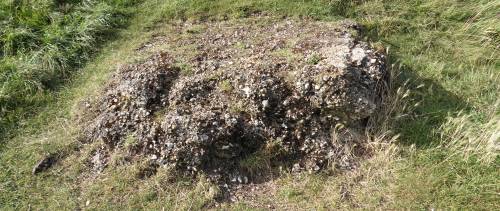
Victorian concrete
The remains of the foundations of the northern pylon: a relic that only an industrial historian with a speciality in Victorian concrete could love.
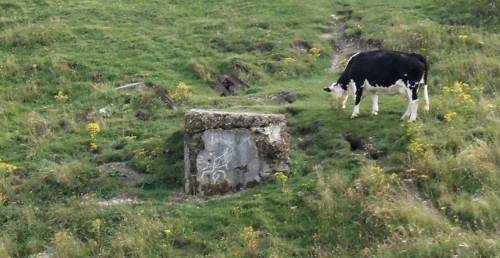
A bovine archaeologist at work.
A bovine archaeologist pursuing field work in the area around what is left of the foundations of the southern pylon.

*In reality there were more than two cables involved: the catenary at the top, two for the rails (one in each direction) the cable loop used for towing the cars, and additional cables to brace the pylons.

References and further reading:

The Dyke Railway 1887-1938

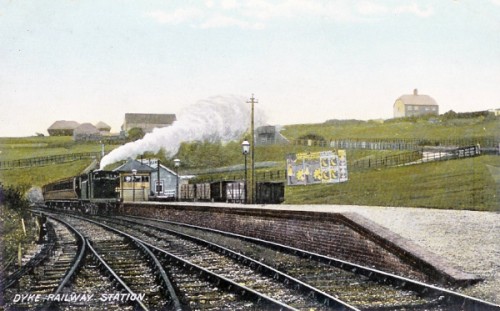
Dyke Railway Station around 1905
Dyke Station viewed from the south around 1905. Note the goods wagons to the right of the platform and the fenced lane leading up the hill. The farmhouse at top right was destroyed during WWII.

Plans for a railway to link Brighton to the Dyke were first mooted in the early 1870s but did not receive parliamentary approval until 1877. It took another decade before the railway was finally opened. In addition to the usual legal and property issues that attend the creation of a railway line, the overall gradient of 1 in 40 posed a significant technical challenge as did the hard chalk rock found at the end of the route. Indeed, the terminus of the line fell short of the Dyke by several hundred yards because the gradient at that point made further extension impractical.

Over the first year of operation, some 160,000 passengers were carried. The only intermediate stop at that time was at West Brighton (now Hove) Station. The total distance was 5.5 miles of which 3.5 were on the slope of the Downs. The trip took twenty minutes (just as the 77 bus from Brighton Station does today). The first additional intermediate stop to be added to the line was Golf Club Halt in 1891. This was a private platform built on what was then the property of Brighton & Hove Golf Club and provided for the use of its members. Two further intermediate stops opened in 1905, both on the main Brighton-Portsmouth line: Dyke Junction Halt (later renamed Aldrington Halt) and Holland Road Halt. The fourth, and final, addition was Rowan Halt built in 1933 to serve the new Aldrington Manor Estate that was then being developed to the north of the Old Shoreham Road.

The railway remained in operation for half a century with the exception of a closure of three and a half years at the end of WWI. When the line first opened in September 1887, there were eight trains a day (five on Sundays) between Brighton and the Dyke (and conversely). In June 1912, there were eleven trains a day (one fewer on Sundays). In November 1938, the penultimate month of operation, there were sixteen trains a day (half as many on Sundays). Conventional locomotives were used for most of the line’s life although a prototype steam railbus (essentially a large bus mounted on two bogies) was employed on the line in the mid-1930s and proved to be very popular with customers.

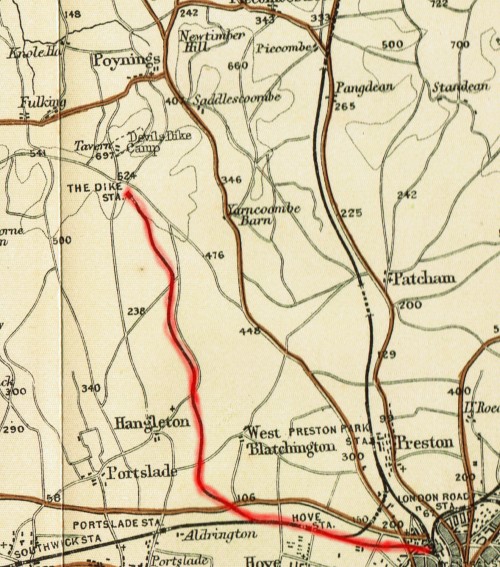
Dyke Railway map from the 1890s.
An 1890s map showing the route of the Dyke Railway

Although useful to members of the various golf clubs situated between Brighton and the Dyke, the primary passenger function of the railway was to take day trippers up to the Dyke in the morning and bring them back in the evening. Demand was thus seasonal and weather-dependent. Many of these visitors would use the Dyke as the basis for a day’s walking. Teashops sprang up in the villages at the foot of the Dyke to cater for their needs. Fulking and Saddlescombe each had one and Poynings had four at one stage. For those unwilling to stray off the Dyke itself, refreshments were also to be had at the Dyke Hotel and at Dennett’s Corner which was only a few yards from the station. A secondary passenger function was to take residents of Edburton, Fulking, Poynings, Saddlescombe and the various local farms into Brighton. The roads were poor and buses did not reach the Dyke until the 1930s. If you were not wealthy enough to have the use of a horse or, later, a car, then access to Brighton was difficult before the railway was built. Locals used the service to shop in Brighton and others commuted to work there.

Passengers were the main focus of the railway. But it also offered a goods service and this was economically important to the local villages. A goods siding was built at the Dyke Station in 1892. Coal, coke, cattle fodder and parcels were transported to the Dyke and collected from the station by horse and cart or by the local coal merchant. The latter then delivered both coal and parcels in the villages (and was paid a penny for each parcel by the railway company). On the return journey, goods wagons would take straw, hay, grain and local produce from the farms and market gardens into Brighton. Goods traffic was discontinued in January 1933.

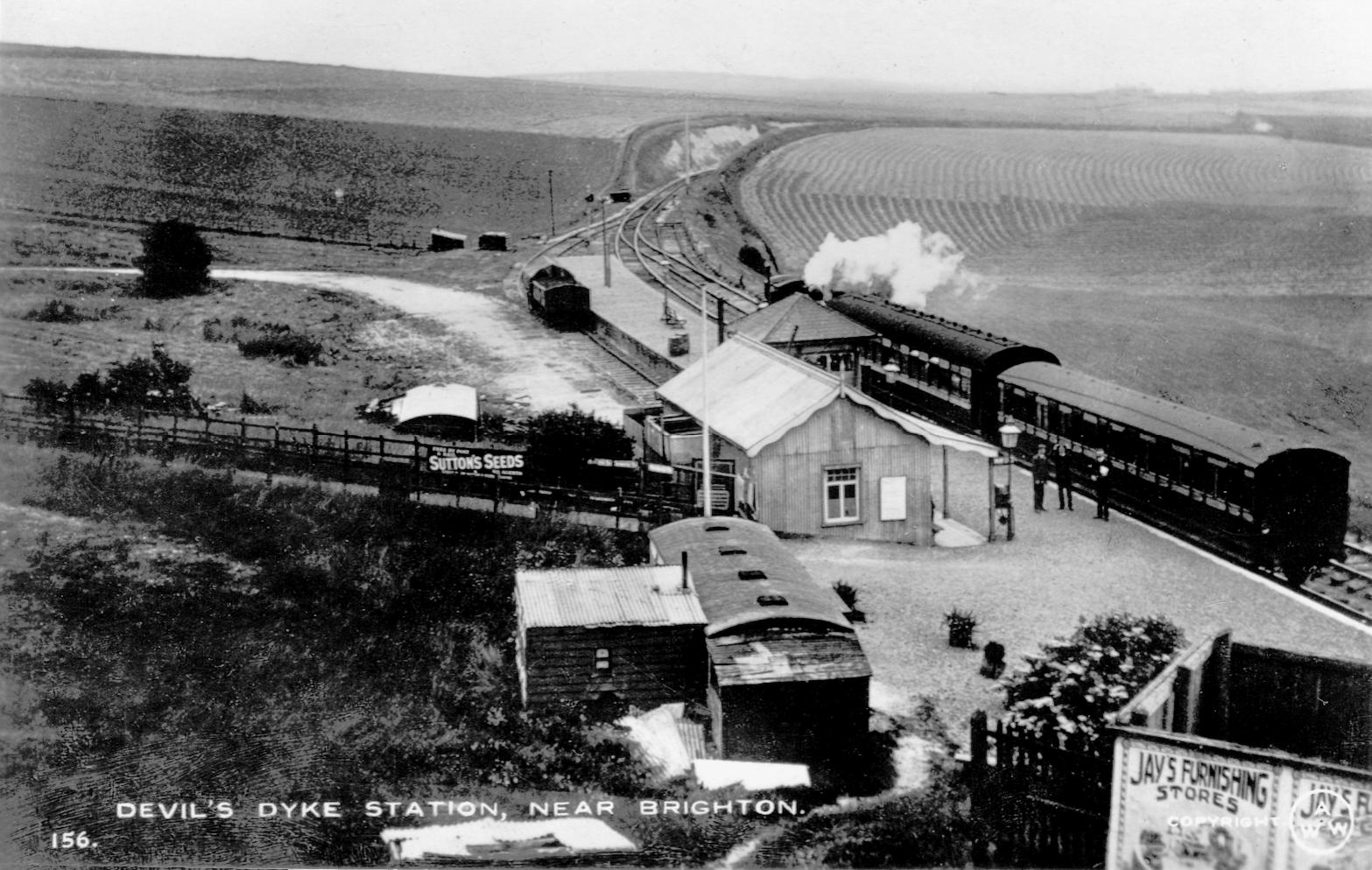
Dyke Station viewed from the north around 1911
Dyke Station viewed from the north around 1911. Note the signal box, the goods siding to the left of the platform, and the fenced lane, complete with ‘Suttons Seeds’ billboard, leading from the station to the roads to the Dyke Hotel and to Saddlescombe. The old carriage, with attached sheds, in the foreground was used as a refreshment room. In a very similar contemporary photo, a horse and wagon can be seen drawn up besides goods trucks in the siding (Harding 2000, page 10).

Golf Club Halt was a request stop rather than a real station. It never appeared in the rail timetables. However, the wishes of club members were reflected in the details of those timetables. There was a platform but that was all. You couldn’t buy a ticket for it — you had to purchase a ticket for the Dyke Station. If there were golfers on board, then the train would stop there to let them off. On the return journey, the train would stop to pick up golfers if they were visible on the platform (after dark, they struck matches). The platform was (and is) some fifty yards north of the clubhouse, perhaps because the gradient adjacent to the clubhouse made a more convenient location infeasible. However, from 1895 on, when a train was about to leave the Dyke Station, a bell would ring in the clubhouse alerting departing members to the need to make their way to the platform immediately. Although club members had mostly taken to using motor cars in the 1930s, the halt remained in use (especially when the weather was poor) until the railway itself was closed.

Golf Club Halt 2012
Golf Club Halt — the edge of the platform in 2012

What remains of the railway today? South of the bypass, Brighton’s urban sprawl has eradicated almost every trace of it. Aldrington Halt remains in use, albeit unmanned. North of the bypass, the route is still visible either from the sky or on the ground, but you need to know what to look for. The cuttings and embankments that were needed to make the uphill route possible are there and dense scrub marks the location of the track for several long stretches. A public cycleway (the Dyke Railway Trail) running parallel to, or along, the track extends from the bypass to Brighton & Hove Golf Club. From then on, the line of the track runs through private farmland but a strip of scrub reveals its presence. Much of Golf Club Halt, which was never more than a platform, is still there, hidden in the scrub. At the northern terminus, Devil’s Dyke Farm now stands where Dyke Station once was. All that was left of the station a dozen years ago was a small chunk of the platform.

Further reading:

  • Paul Clark (1976) The Railways of Devil’s Dyke, Sheffield: Turntable Publications. [This booklet contains a detailed history of all aspects of the line and includes maps, photos, transcripts of relevant documents, and engineering diagrams.]
  • Peter A. Harding (2000) The Dyke Branch Line, Byfleet: Binfield Print & Design. [Reprinted in 2011, this well illustrated booklet is currently the most readily available work on the history of the railway.]
  • Hove Borough Council (1989) Dyke Railway Trail [PDF], a four page leaflet. [The map contains a number of errors: e.g., both the exact railway route and Golf Club Halt are mislocated. Nevertheless, the leaflet is still useful if you plan a walk in the area.]
  • Barry Hughes (2000) Brighton & Hove Golf Club: A History to the Year 2000. Brighton: B&HGC. [Pages 27, 30, 33, 42, 48, 60-61, and 115 contain material relevant to the railway and Golf Club Halt.]

GJMG

Some other material relevant to the C19 and C20 history of the Dyke:
2012 10 11 PC Minutes

Minutes of Ordinary Parish Council Meeting at 7.30pm on 11 October 2012 held at the Village Hall

Present: Chairman Ms K. Watson, Vice Chairman Mr M Trist Councillors Ms L. Dyos, Mrs P. Rowland and Clerk to the Council Mrs Andrea Dickson. Chairman of Mid Sussex Council Mandy Thomas-Atkins, MSDC Councillor Colin Trumble, West Sussex District Councillor Peter Griffiths and 12 members of the public

1. Chairman welcomed the members of the public and introduced Chairman of Mid Sussex Council — Councillor Mandy Thomas-Atkins

2. Apologies: None

3. Declaration of Interest: None

4. The minutes of the previous meeting held 12 July 2012 having been previously circulated, were taken as read and approved and signed by the Chairman.

5. Matters Arising.
Planning: Old Pump House — In July 2012 enforcement order that was lodged in October 2011 was upheld by the planning inspector. A period of 9 months has been given to cease residential use and one extra month to remove the caravan and tidy up the land.

Market Garden — The PC met with Nick Rogers (Development Manager) and Steven King (Team Leader) planning investigation and enforcement, both Mid Sussex planning, at the end of August. Market Garden and other general planning queries were discussed. Progress with Mid Sussex planning will be monitored. The PC will be writing to MP Nick Herbert to ask for his help in addressing various issues relating to travellers. The PC was disappointed to hear that some residents did not feel that it had pulled its weight over the Market Garden issue. The councillors felt it needed to go on record that a large amount of work goes on behind the scenes and that they felt very frustrated over the issue. The public could comment on this matter at the end of the evening when comments are invited from the floor.

Preston Nomads — Only 4 (possibly 2) of the initial 6 people are still interested in the parking spaces. Residents who wish to take up the parking spaces need to collect padlock keys, those who do not intend taking up the spaces need to return the post keys. If anybody knows of anybody else that may be interested in a space please contact the Clerk. The car park area will be planted this month with indigenous plants. The possibility of filling in the potholes in the bridleway immediately outside the entrance is being looked into by Preston Nomads. The PC wish to thank Paul Hird for his work on this matter. (Clerk) A reminder that planning applications which fall within the SDNP are now posted on the South Downs website rather than Mid Sussex.

Highways: A meeting was held with highways on the 25 September to discuss ongoing problems.

Shepherd & Dog — A temporary cure is in place; however with autumn approaching it is felt that more work needs to be carried out. WSCC have investigated and will submit a request for further works, after which the PC will look at turfing the banks to complete the works. Stones have been washed down from the bridleway onto the highway by The Shepherd & Dog. Highways are going to discuss this with the bridleway owner and public rights of way.

Lady Brook Spring — A works order has been raised by WSCC to fence the spring. As a temporary solution the bollards will be replaced with a fibreglass plate over the entrance. A notice will be placed in Pigeon Post to gauge interest in making a feature of the spring. (Clerk)

Four Acres Corner — The drain & pipe have been flushed through. The size of the sump should have been increased at the same time — this was not done. Tim Boxall WSCC will chase this up. Once this work has completed the PC will monitor the situation.

Clappers Lane banking — The condition of the banking is the responsibility of the adjoining landowners. Highways have written to them but received no response. Highways suggested that the PC write to the Landowner & the person responsible for the damage Grange Farm and Badgerswood respectively. (Clerk).

Clappers Lane road surface — Highways will write to the landowner opposite The Sands to request that the ditches be cleared/kept clear. Highways were on site earlier today with Drainage Strategy team to look at the north end of the road. Contrary to what the PC had previously been told, it appears that no works order had been placed for the road surface to be repaired prior to that meeting. Highways suggested that all landowners be reminded to cut back hedges as winter approaches- this should be a request in Pigeon Post. A suggestion was made at the Village Plan meeting that signs could be placed at the north end of Clappers Lane saying something like “do not follow SatNav – unsuitable for large vehicles” Highways and PC will look for suitable signage for each end of the village.

Footpath 4f — This is still with the legal department; the order is expected to be made in the near future. The PC will be advised and then there will be a 28 day statutory objection period.

Stiles & Gates — The repair and maintenance of stiles and gate on public rights of way are the responsibility of the landowner over which the route crosses. This is also the case for trees, hedges, side vegetation and fences. The only exception are bridges which are the responsibility of Highways.

Ram Pump House — The National Trust have completed the work on the door and lock. Kate Watson and the National Trust are the key holders.

North Town Field — This will be addressed as a separate agenda item.

Councillor Vacancy — There is still a vacancy so please ask around.

PC Official documentation — The Standing orders, Financial Regulations, Code of Conduct and Declaration of Interest are all available via the Website, or as a hard copy from the Clerk.

Training Courses — The Clerk is half way through the first module of the Working with your Council Course. The clerk is also attending a networking day in November.

Joint Parish Meeting — This was held at Albourne in September. Councillors were present from Albourne, Poynings, Twineham and Woodmancote. Disappointingly nobody from MSDC planning attended the meeting, even though they were invited as a large part of the meeting revolved around planning. Councillor Sue Seward has asked to be copied in on any planning issues, and she will try and arrange a meeting with the planning dept to discuss concerns. All councils will review in six months and decide the way forward. Faster Broadband was discussed at the meeting; Fulking had a good response with 66 households expressing an interest in faster broadband. Please encourage anybody who has not already signed up to the scheme to do so. Suppliers are being invited to tender by the summer of 2013 with the faster broadband being in place by 2015.

Website — The new website is up and running and very easy to use. The new website address is fulking.net.

WSCC Councillor Peter Griffiths gave a brief report. He apologised for his absence from recent meeting; this is due to a clash of duties. In the future the two main costs to West Sussex will be care of the elderly and the cost of waste disposal. Providing these services will mean that other services will need to be reduced. It was suggested that an article be placed in the Pigeon Post with regards to the mobile library service. (Clerk)

6. Councillor Colin Trumble MSDC gave a brief report: Council Tax changes to benefits consultation will be completed by December. Auditing of single occupancy claims will be carried out to ensure it is fair. E-bills will be available to those who wish to pay that way, it is envisaged that this will save a lot of money. Grants to community groups that do not need matched funding. Money may still be available, but would have to be spent within the current financial year. Colin to provide more information on this. Budget Work has started on this for 2013/2014. Travellers were mentioned briefly and Councillor Linda Dyos said that he would be hearing from the PC shortly on the matter. Councillor Colin Trumble left the meeting 7.45pm for other commitments.

7. Financial Matters. The following payments were agreed and cheques signed: 100582 SALC Clerk’s networking day 60.00; 100583 Clerk’s salary & expenses 934.77; 100584 Councillor expenses 11.20. Cheque stubs were cross checked with the cheque list and both signed. The quarterly bank reconciliation was checked and signed. It was agreed that the Financial Regulations would be changed to state Internal audits would be carried out Annually rather than regularly as previously stated. (Clerk) It was agreed that the PC would look into setting up E banking (Chair)

8. Winter Management: The winter management plan is well underway. A meeting will be held in the next few weeks with WSCC to discuss the plan. Once it has been finalised a copy will be posted on the website and on the parish notice board. (Clerk) Farmer David Ellin still has an agreement with WSCC for the loan and use of the snow plough .(Michael Trist will contact the farmer when it is necessary to use the snow plough ). The clerk attended the Mid Sussex Emergency Planning liaison Group meeting in September and had nothing to report back from the meeting. It was felt that as Fulking is a small parish, the meeting would not have much relevance and therefore apologies would be sent for future meetings.

9. Risk Assessments: The Financial risk assessment and risk assessment having previously circulated were agreed and adopted. They will be placed on the website or hard copies available via the clerk. (Clerk)

10. Playground inspection review: The annual Rospa inspection was carried out in June; this highlighted a low risk of entrapment in the gate. The PC asked if anybody had any ideas how this risk could be eliminated? Mark Stepney will carry out the remedial work on the trip hazard and the moss which were also highlighted in the annual inspection. The weekly inspection rota needs to be updated. (Clerk). New inners for the bins in the playground need to be purchased (Clerk)

11. Community Bus: Has provided a service to Fulking for 20 years two days per week. It is free to bus pass holders, otherwise journeys will cost between 1-2 depending on the length of the journey. The PC agreed to give a contribution of 100 for this financial year. This will be reviewed annually. An article will be put in Pigeon Post to give details of the service provided. (Clerk) A thank you letter is to be sent to the providers (Clerk).

12. Fountain: The PC will arrange for the bollard in front of the fountain opposite Laurel House, to be fixed. Paula Hazard has the bollard. (Pam Rowland to contact Mark Stepney).

13. Crime Update: Crime in Fulking was low over the summer. Please stay vigilant. A notice about cheap shed alarms from MSDC will be placed in the noticeboard, website & Pigeon Post. (Clerk)

14. Comments from the floor: Card making day on 13 October. The Police Authority Elections were mentioned. Where is the Polling Station? This is to be looked into & published on website and noticeboard.The Polling Station is Playing Field Pavilion, Poynings BN45 7BH (Clerk)

15. Dates of the next meeting: The next Parish Council meeting will be held on 10 January 2013

Meeting closed at 9.05pm

[ BoilerPlate plate = “PC_Disclaimer” ]